What is ACT again?
ACT is the first programme of KIN, developed through co-creation. ACT stands for ‘Accelerating Climate Transitions’ and focuses on accelerating just climate transitions in four urban regions: Eindhoven, Maastricht, Nijmegen, and Rotterdam. The aim is to provide maximum support to residents and other actors in neighbourhoods with knowledge and skills from various scientific disciplines combined with innovative practical experiences. This approach builds on lessons learned from previous projects like the ‘Crutzen workshop’, where integration and collaboration were central.
Overview of the Day
The event took place in the beautiful building of the KNAW, one of KIN’s founding organisations (together with NWO). The day began with an inspiring opening speech by KIN’s General Director Michiel van den Hout. The morning sessions included inspiring presentations and interviews with representatives from Eindhoven, Maastricht, and Nijmegen, such as Saskia van Hulten, Anouk Schmid, and Jan Luijten. They showcased local initiatives and challenges related to climate justice. A presentation by ‘Buurtbinders’, an organisation focused on strengthening neighbourhood initiatives, motivated everyone to ensure the success of the programme. The atmosphere was positive and energised, contributing to the success of the day according to participants.
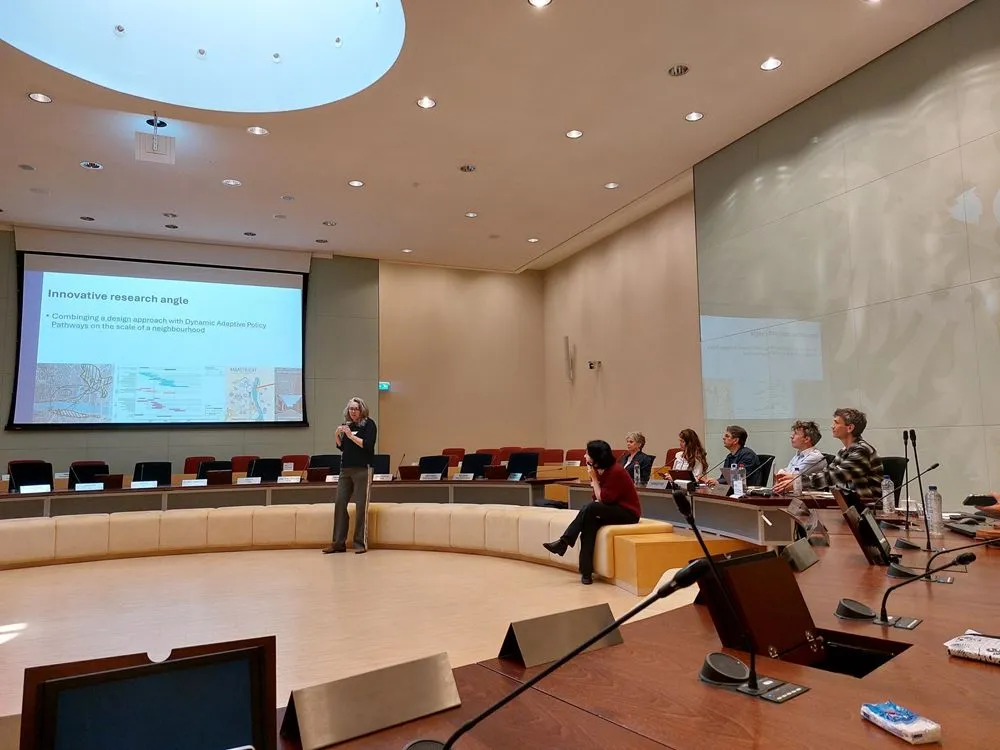
After lunch, the discussions delved deeper. Although the term ‘kick-off’ suggests a starting point, the work packages have been active for months. Each of the seven working groups briefly presented their research questions and progress, followed by group discussions to strengthen the integration and coherence of the work packages. The day ended with an informal networking session.
What’s Happening in the Cities? Highlights from the Panel Discussion
During the panel discussion with representatives from Eindhoven, Maastricht, and Nijmegen, it quickly became clear that each city faces unique challenges, but there is also significant overlap. Saskia van Hulten, Strategic Programme Manager for Climate and Energy in Eindhoven, highlighted issues such as energy poverty and grid congestion. “We need to make difficult choices: schools are unable to open because they cannot connect to the electricity grid, while we must also engage residents who are already overwhelmed. True climate justice requires complex trade-offs.”
In Maastricht, the focus is on mobilising residents and greening neighbourhoods, according to Anouk Schmid. “We are committed to a bottom-up approach, but it’s challenging to engage people who already have so many other concerns. In the pilot neighbourhood ‘Bosstraatkwartier’, we aim to show how different social groups can connect and make an impact together.” She emphasised that the neighbourhood’s social mix presents both opportunities and challenges.
Jan Luijten from Nijmegen brought a different perspective, stressing the importance of climate justice in urban planning. “We see that resident initiatives often come from highly educated individuals in certain neighbourhoods. It’s our responsibility to ensure we also reach residents in vulnerable neighbourhoods, where the problems are most pressing. At the same time, we face internal organisational barriers, such as fragmented responsibilities.”
What stood out in the discussion was the shared need for integrated solutions. The representatives stressed that the energy transition cannot be viewed separately from social justice, and collaboration with residents and organisations is essential. As Saskia aptly put it: “You can’t think green when you’re in the red.” The panel provided valuable insights and inspired participants to think beyond sectoral boundaries.
Key Takeaways
One of the key insights was the importance of aligning the various work packages. During the group discussions, participants concluded that integrating themes—ranging from energy poverty to neighbourhood greening—is essential for making a real impact. Exploring joint approaches and connections between disciplines sparked new ideas and insights that will be further developed in the coming steps.
The positive atmosphere and enthusiasm were noteworthy. Participants highlighted that the mix of policymakers, researchers, and practical experts created a dynamic environment. The openness to learning from each other and the willingness to collaborate across sectoral boundaries were cited as major successes of the day. The sense that everyone was contributing to a larger goal made the day especially meaningful.
In short, this inspiring start has laid the foundation for further collaboration. It is clear that the ACT programme is not just an ambition but also a shared commitment to accelerating the climate transition in a just and effective manner.
What’s Next?
The coming months ACT will focus on action. The ACT programme will prioritise implementation in neighbourhoods, supported by workshops on climate justice at local, national, and global levels. Additionally, the different work packages will continue to be integrated and aligned with urban practice.