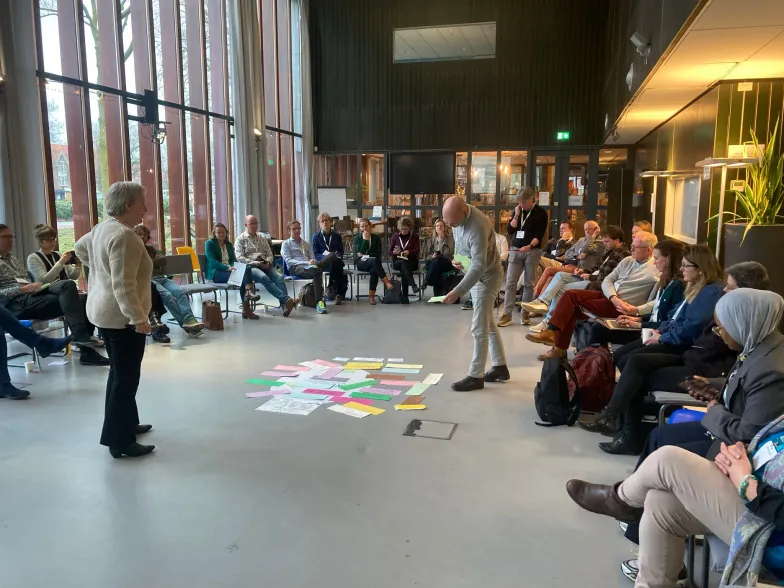
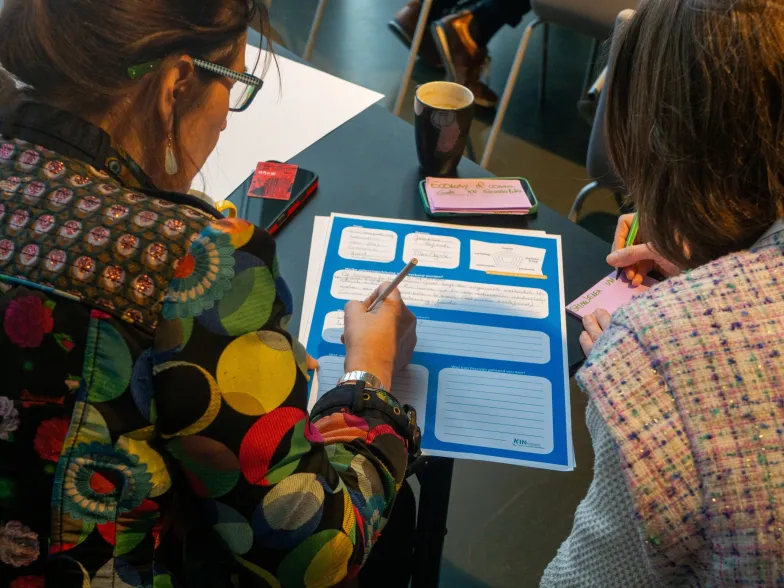
On 23 April 2025, the KIN organised a meeting with a group of some 20 experts (including universities, PBL, KNMI, WKR, banks, insurers, consultancies) to reflect together on the Cost of Doing Nothing. The reason for this was a request from the national climate advisory bodies, to see how we can better use existing economic insights for more decisive climate policy. After all, it is clear that even though we are not going to meet the climate targets, there is a political trend of postponing and doing less. From this question, the KIN launched a study. In this, it soon became clear that there are already a lot of studies (in progress), and that the fundamental question is not so much what the cost of doing nothing is, but how we break through doing nothing. An overview of relevant recent publications can be found at the bottom of this report.
If all these insights do not lead to the necessary policies, what then?
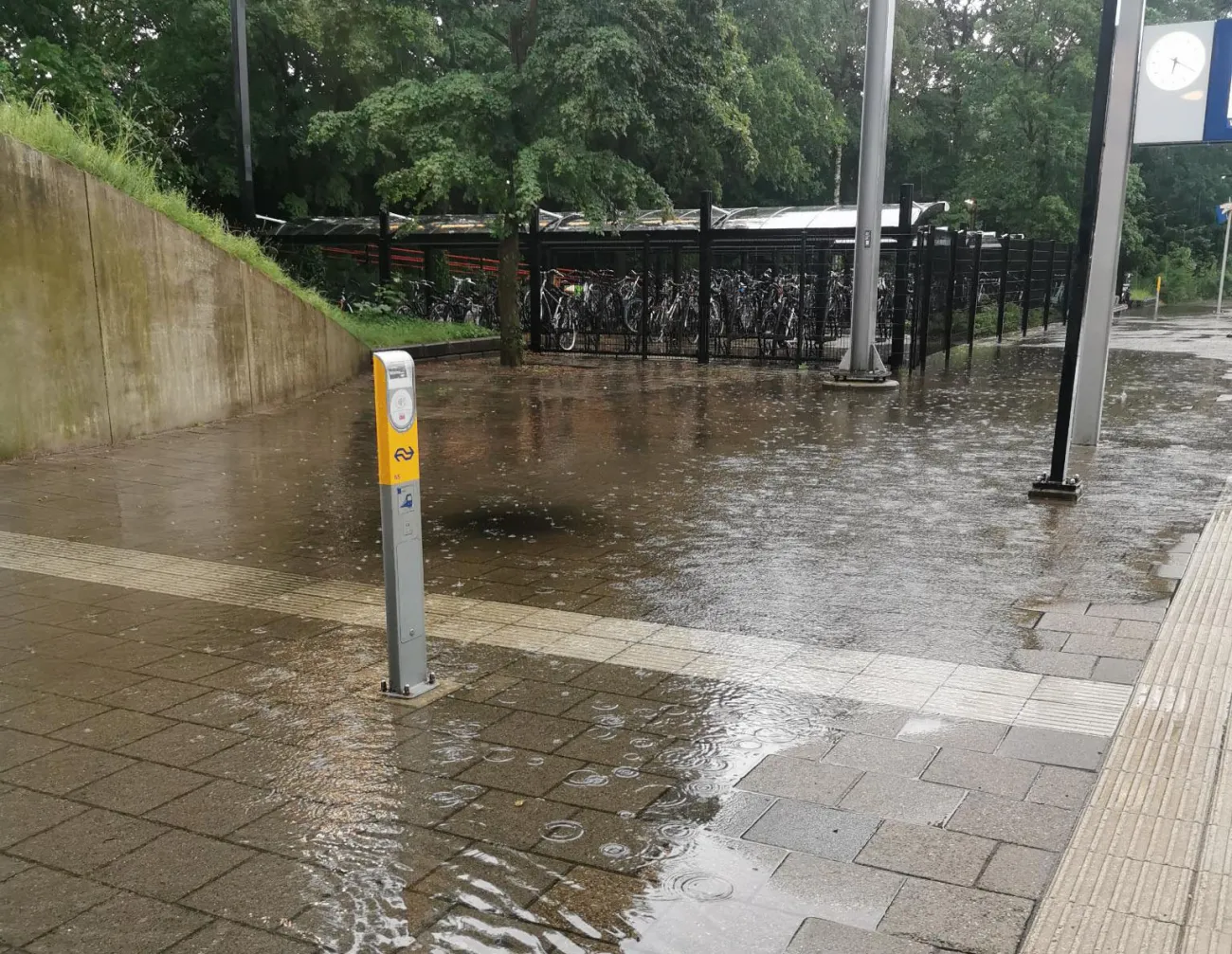
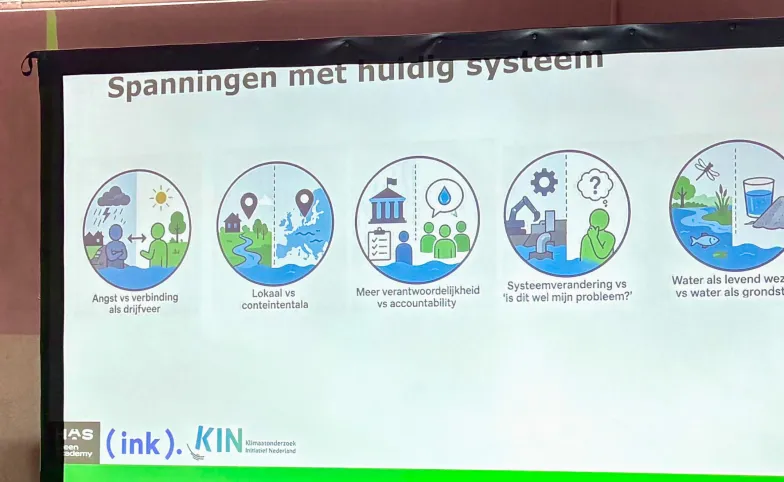
A presentation of existing studies and insights by Martijn Bart (KNAW/KIN) makes it clear that the impact of climate change is no longer a future scenario, but a reality that is manifesting itself more and more emphatically. Drought, extreme precipitation and heat waves are already causing significant economic and social damage in large parts of the world, but this is dwarfed by the costs ahead. The various studies conducted by scientific, public, and commercial parties to assess the costs of climate change have their limitations. They are often based on a limited number of risk parameters (e.g. ‘drought’) thus missing system effects, or conducted on a global or European scale (e.g. ‘X% damage to GDP’) thus missing the specific effect on a Dutch scale. Even science-based (communication) initiatives such as the climate monitor and climate damage estimator, or recommendations put forward from various advisory reports (e.g. ‘ensure more equitable policies’), offer insights and adequate problem analyses, but so far do not seem to lead to desired impact and change. But if all these insights do not lead to necessary policies, what then?
Future costs and benefits
There are already a lot of economic and social costs due to historical inaction, and the task is growing due to inaction. One reason is that costs and benefits are distributed very differently for parties. The benefits of incurred costs lie in the future, beyond the time horizon of (political) leaders, and are difficult to understand. In short, doing nothing or even less and less is economically and politically explicable. Moreover, the question here is whether more and more specific figures will lead to additional policies.
Structural policy adjustments
Yet there are also parties that are already starting to feel the (financial) pain of climate change. For insurers and pension funds, climate change is increasingly leading to structural policy adjustments. The question is how to make it clear that more parties will be hurt by the expected costs. Does this require different framing? Do we need to better identify who will get rich from doing nothing and where the countervailing power and vested interest? Or instead show what the gains are from doing something or more and for whom? After all, investing in transition can lead not only to lower financial and welfare costs, but also to huge financial and social benefits. This does require decision-making that takes into account long-term and short-term, and thus social and financial costs and benefits.
Make the message discussible and tangible
During the meeting, there is consensus that it makes sense to keep spreading the message around the costs of doing nothing. But also that in the broader communication and social discussion, new ways should be sought to make both the costs of doing nothing and the benefits of doing something (and more) discussable and tangible. This will also help increase social and political pressure. It is important to carefully consider to whom to address this message. Politics is important, but the most mobilisable seem to be those social parties who are faced with future (or already current) costs of (historically) doing nothing or too little.
Concrete action
To this end, KIN has developed a widely supported plan to take concrete action at multiple levels, including communication, policy, finance and local case studies. We will be working on this in the coming period. Would you like to know more, or contribute your ideas and efforts? Please email Martijn Bart (KIN/KNAW): martijn.bart@knaw.nl
Want to read more?
A selection of recent publications: