Economic transition: the costs and benefits of (in)action

What does an economy look like that focuses not on GDP growth, but on well-being, ecology and justice?

What is needed to achieve this sustainable economy and how is our current economic system holding back these changes?

We are exploring these questions from a practical perspective as part of the program: ‘Economic transition: the costs and benefits of (in)action’. Together with partners from academia, the professional sector, government and social movements, we are working to shape this transition, set it in motion and anchor it. In doing so, we actively apply knowledge in practice to bring about a transformation of our current economic system.

Our current economy revolves around one dominant factor: growth in gross domestic product (GDP). We speak of progress when GDP rises. However, this focuses solely on economic output, expressed in terms of money. It does not take into account people’s well-being or a livable planet. For example, damage and remediation—such as oil spills and hospital care—are factored in, but the value of clean air, nature and informal care is not. As a result, policy and investments focus solely on increasing production and consumption, regardless of the consequences for our social and ecological systems.

The result? GDP growth causes ecological and social disruption. A global estimate shows that two-thirds of all corporate profits come at the expense of people and the environment.

The key players in our economy reinforce this growth paradigm. Companies prioritize profit and shareholder value and drive consumption. Banks create money through lending that primarily goes to established, polluting sectors. Governments subsidize fossil fuel companies, partly under the influence of the associated lobby. Citizens are treated as individual consumers rather than as a collective group capable of shaping the system. The knowledge system legitimizes all of this by presenting growth and efficiency as neutral principles. In this way, the system perpetuates itself, regardless of the consequences for people and the planet.

The costs of inaction

At the same time, the current economy is facing challenges caused, among other things, by its own growth. For example, climate change is undermining the current economic system, as are geopolitical tensions and an aging population. Globally, GDP growth rates are declining: Japan has barely grown since the 1990s and the Netherlands recorded only 0.1% GDP growth in 2023. For citizens, however, the decline is many times more severe because well-being, health and the living environment have come under pressure.

Consequently, the costs of the current system are rising rapidly. The exact extent of the monetary damage varies—with estimates ranging from hundreds of billions to trillions per year.

This leads to the indisputable conclusion: not only is the current economic system not designed to be sustainable, but it is also becoming increasingly unsustainable. Doing nothing is therefore many times more expensive than taking timely and appropriate action.

The benefits of action

Meanwhile, the pressure to change is growing. Alternative economic concepts are gaining ground: degrowth is a serious academic movement, the phasing out of polluting industries is a reality, local governments are embracing the doughnut economy and segments of society are normalizing reduced or more equitable consumption.

A recent study shows that more than 735 organizations in 35 European countries are actively working on various aspects of ‘the new economy’: ranging from democratic ownership to more sustainable construction and land use.

These perspectives raise questions such as: how can we develop a way of living together in which both production and consumption remain within planetary boundaries? And what benefits does this bring to our health, living environment and well-being?

This requires connecting parties that want to bring about change within the old system but are currently getting stuck, with new initiatives emerging from the grassroots. It is crucial to examine where this is already working and why, and how we can bring these efforts together and scale them up.

The role of KIN

KIN believes it is important to support projects that contribute to a new and sustainable economy. In addition, we offer (thanks to our integration team) project support, outreach and media coverage. We facilitate and encourage connections between science, policy and practice, as well as collaboration among and connections with other units within KIN, such as our Pact community.

What has already happened?

Skip this slider about What has already happened?
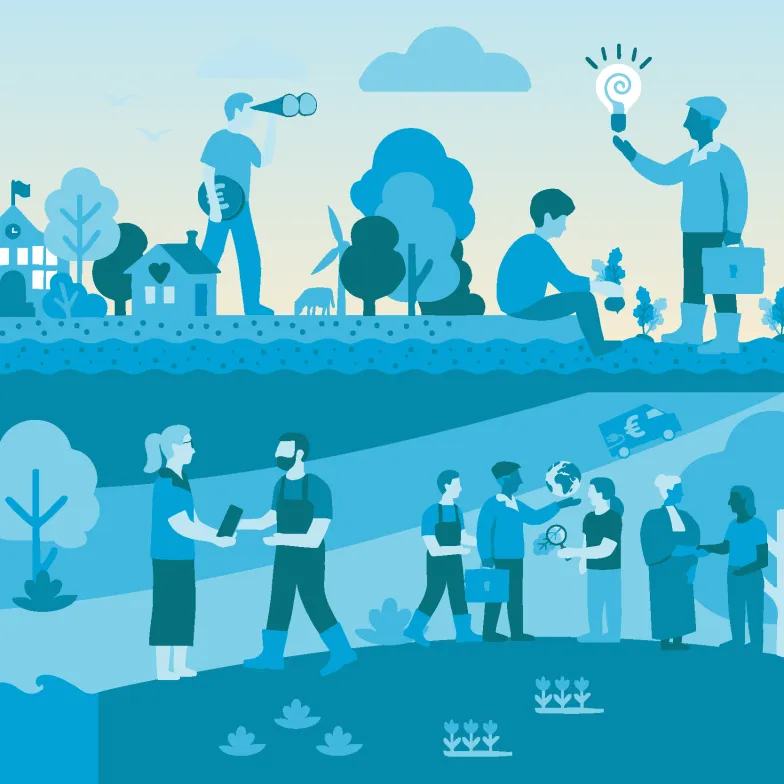
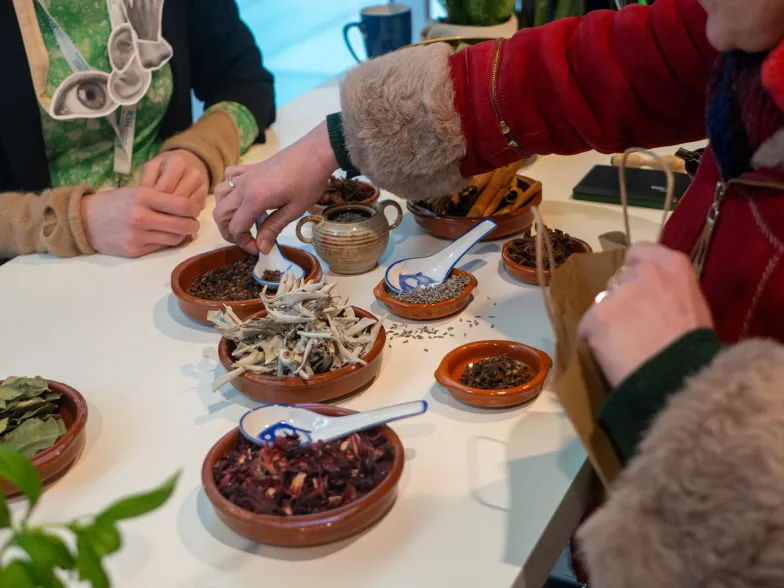
Sensory journey lets workshop participants experience the new economy

The Sensory Journey is designed by KIN Artist-in-Residence Sissel Marie Tonn...

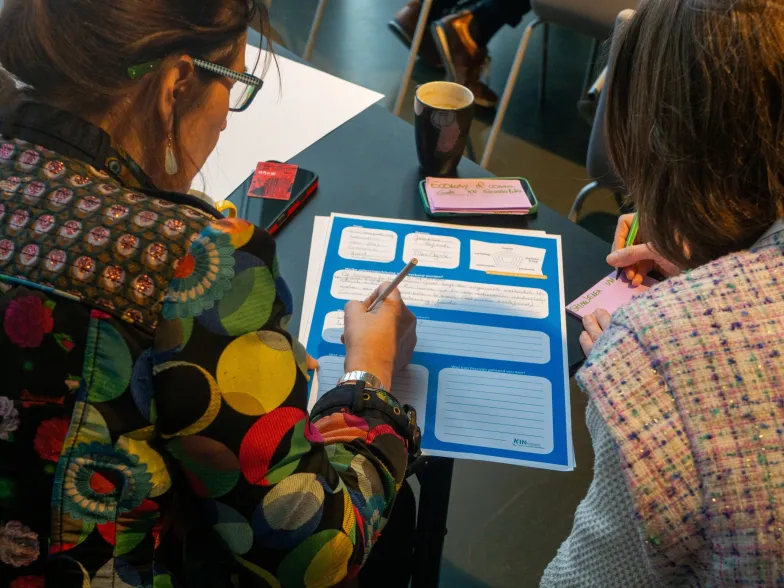
Crutzen workshop The cost of (In)Action: open, curious and action-oriented

Sometimes you don’t need a traditional conference programme, but rather time...

Apply now for the Knowledge in Action grant Economic transition: the costs and benefits of doing (nothing)

This new Knowledge in Action grant from KIN encourages collaboration between...

Interviews: In conversation with the builders of a future-proof Netherlands

The KIN network is bursting with people who are working hard all year round to...

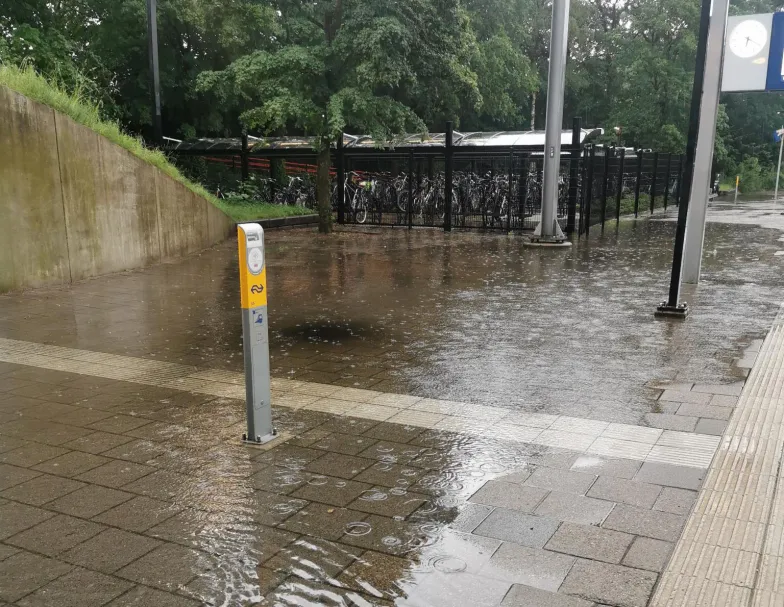
The Cost of Doing Nothing: an exploration of how to make the financial consequences of climate change more visible

We often talk about the cost of climate policy. But what are actually the costs...