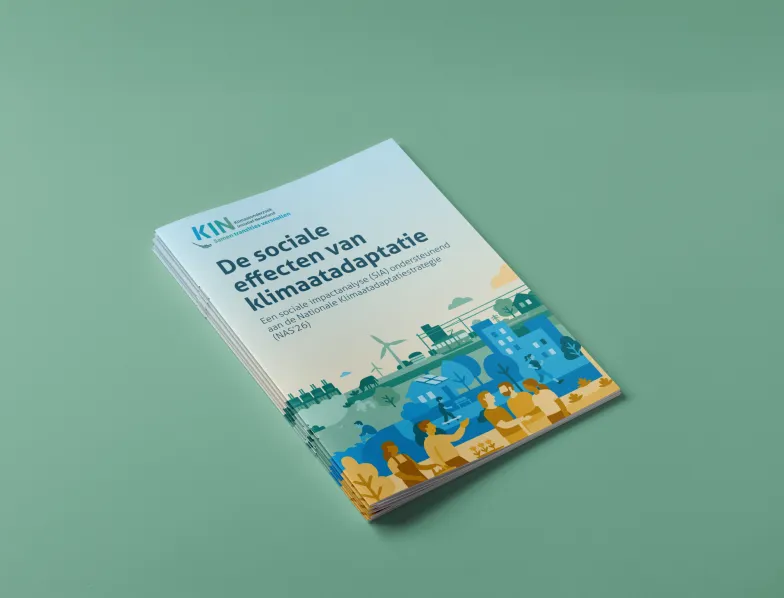
Climate adaptation policy has an impact on citizens and society, for example on healthcare, access to basic services and culture. The social impact of policy measures has scarcely been assessed, and when it is, it often focuses on the impact of policies that have already been implemented – expressed in quantitative figures. In the Social Impact Analysis, we explore the social impact of climate adaptation policy in advance, so that policy choices can be weighed up more effectively. Furthermore, the Social Impact Analysis provides a comprehensive analysis of the (cumulative) effects, whereas existing analyses often focus on just one social effect. To this end, the Social Impact Analysis looks (well) ahead. The results are intended to provide input for policy officers to ensure that social consequences are taken into account in good time during the development of climate adaptation policy.
The NAS’26, comprising 15 adaptation pathways and the Social Impact Analysis, was made available for public consultation just before the summer of 2026.
From health to affordability and access
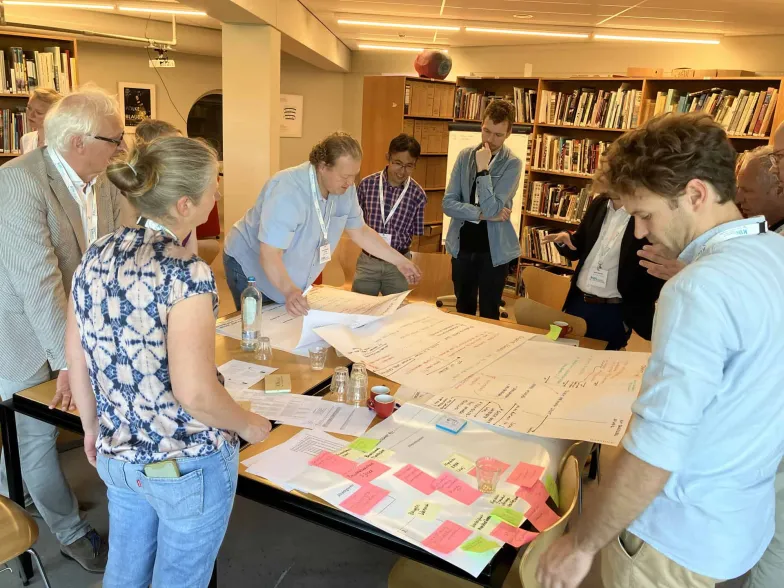
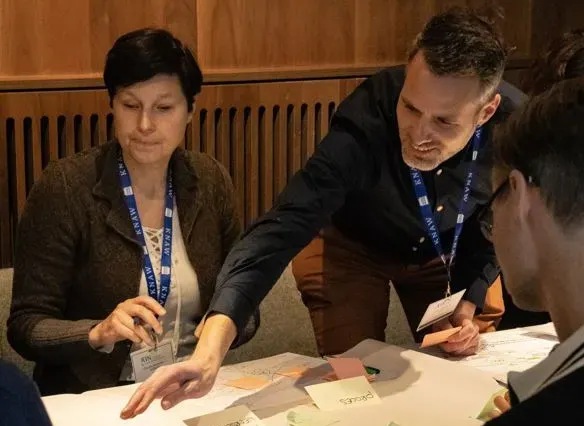
In the first half of 2025, KIN brought together experts from science and practice to jointly examine the possible social impact of climate policy on the 15 challenges of the National Climate Adaptation Strategy (NAS’26) during two sessions. The first session focused on identifying possible effects per theme. The Social Impact Analysis has five main themes: Health, Affordability, Access to basic services, Culture and Influence, and Legitimacy. The methods and data sources that can be used or analysed for this purpose were then identified. Another objective was to gain insight into which links are still missing. These sessions focused in particular on how to carry out a social impact analysis and on which themes. After these sessions, a small group of experts set to work to actually carry out the analysis on the NAS’26 pathways. The method developed will soon be applicable in various contexts. For example, the NAS’26 also applies to the Caribbean Netherlands.
Expert judgement
The above-mentioned sessions and the analysis were carried out according to the expert judgement methodology. This method is based on a concept of knowledge from transition science. It states that even though you cannot know everything, you can still make a well-informed judgement. In order to arrive at a sound analysis of the social effects of the various adaptation pathways, the knowledge of researchers is supported by the knowledge of experts from the field. These include, for example, experts with experience in certain domains or leaders of residents’ initiatives who are well aware of the (often positive) social effects achieved by their climate adaptation initiatives.
Next steps in the run-up to the NAS’26 advice
In the summer of 2025, the analysis will be carried out by a core group of experts: Henk Oosterling, Caroline Bulstra, Lianne de Vries, Jeroen van der Waal, Joyce Browne and Charisma Hehakaya. They will be supported in their analysis by various practical and scientific experts. The results will be ready in October 2025, but in the meantime, there will be close cooperation with stakeholders from various ministries to finalise interim results.