New Ways of Funding: A Call for 'Impossible Projects'

“Impossible Projects” invites climate researchers to think boldly and explore uncertainties. Just before the summer of 2025, the project launched an ‘unusual call’ for the sharing of ‘unfundable gems’. Through this call, the project team behind ‘Impossible Projects’ – a collaboration between Foundation We Are and the KIN – aims to gain insight into the barriers and bottlenecks in the current funding system for scientific and practical research in the field of climate (transition).

“Impossible Project Ideas” is part of the New Forms of Funding project, an experimental initiative that aims to accelerate transformative and transdisciplinary research collaborations in the field of climate transition by removing current constraints and barriers. By sharing an ‘impossible project’ idea, (practitioner) researchers, artists and designers contribute to gaining a better understanding of these countervailing forces.  By developing a call for ‘Impossible Projects’, we aim to identify new forms of funding that will, in future, make it possible to realise seemingly ‘unfundable’ gems. 

More about the call for ideas for impossible projects

Conventional funding models are often based on competition between consortia and tightly predefined project plans. While this works for certain forms of research, it aligns less well with the transdisciplinary, collaborative and process-oriented work needed for climate transitions.

In spring 2025, the project began with exploratory conversations about bottlenecks in the current funding system. In summer 2025, this was followed by an open call for so-called ‘Impossible Project ideas’: ideas that are relevant and valuable, but prove difficult or impossible to fund within the existing system. Climate researchers in the broadest sense of the term (academics, makers and practitioners) were invited to submit an ‘unfundable gem’. In total, 37 ideas were received. In autumn 2025, five ideas were selected and further developed by their proposers.

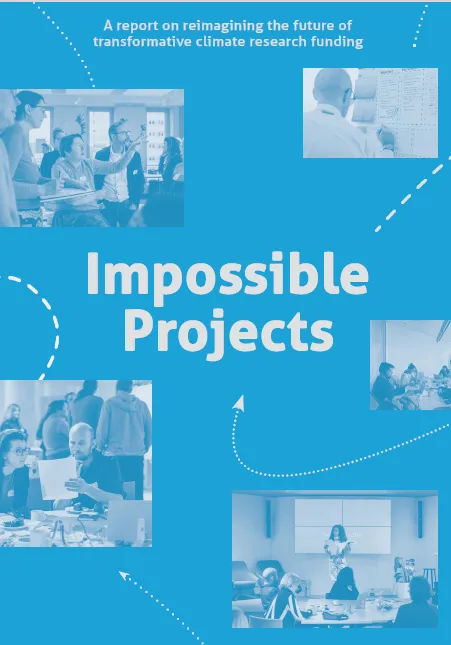
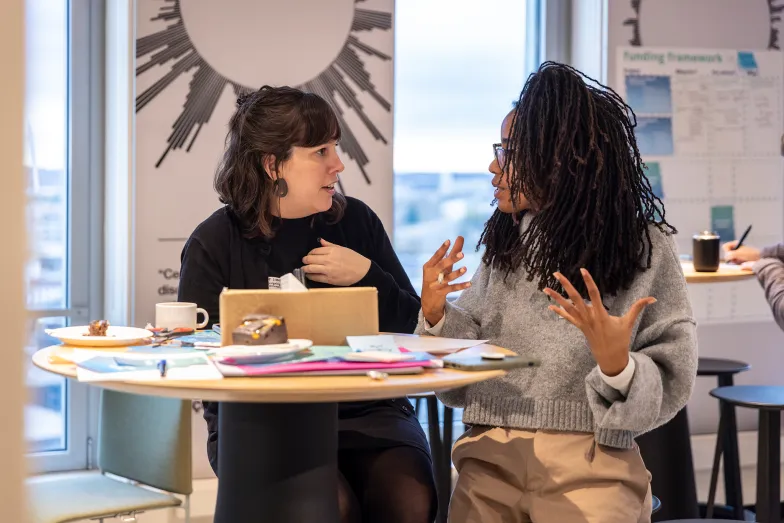
During a co-design session in autumn 2025, a reversal then took place: rather than adapting the idea to fit the scheme, the scheme was designed around the idea. The insights from this trajectory were brought together in early 2026 in the Impossible Projects report and further explored in the podcast series above.

About the “New Ways of Financing” project team

This experimental call is an initiative of the “New Financing Methods” project team, a collaborative assignment carried out for KIN, consisting of Kornelia Dimitrova and Alex Szwaj (Foundation We Are), Jonas Torrens (Utrecht University), Mattijs Taanman (Erasmus University Rotterdam) and Stephi Holst (KIN). This group was established with the aim of bringing about a shift towards new ways of working together from the perspective of the financing system, building on current interest and exploring new possibilities in an action research and experimental way together with relevant stakeholders. In doing so, we contribute to KIN’s objectives of accelerating transitions at the system level, with the aim of promoting diversity and inclusion in funding and ultimately creating the conditions necessary to enable action for climate justice.

What has already happened

Skip this slider about What has already happened

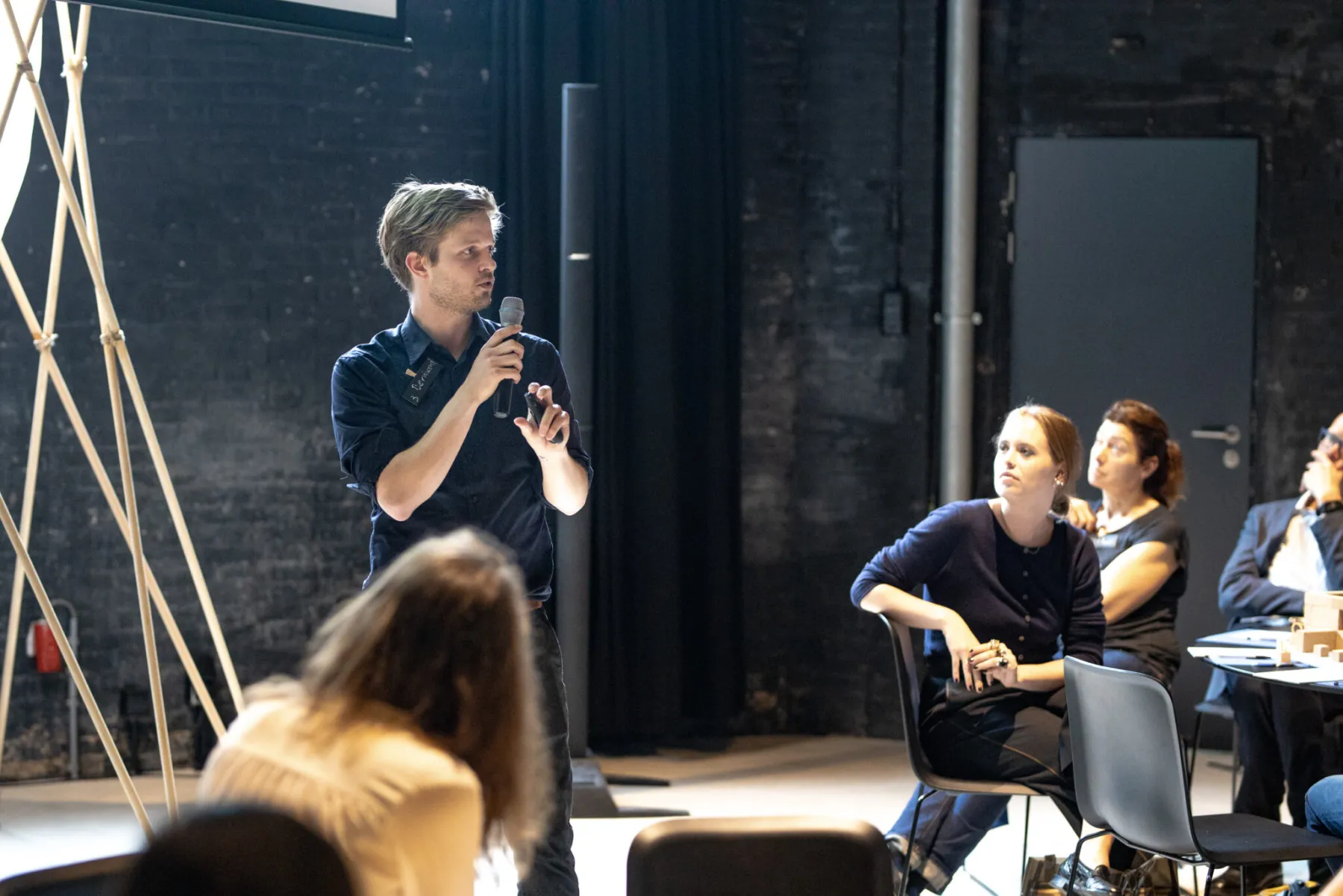
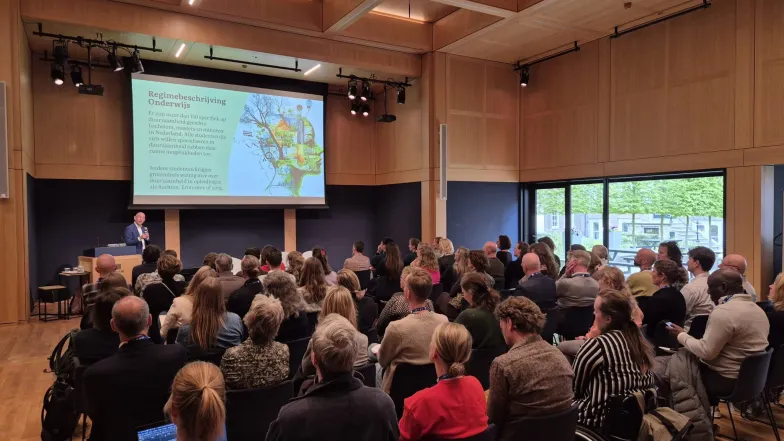
‘Impossible Projects’ workshop: researchers and funders taking on each other’s roles

On May 18, during the SIA conference ‘Research and Creative Practice’ at the...
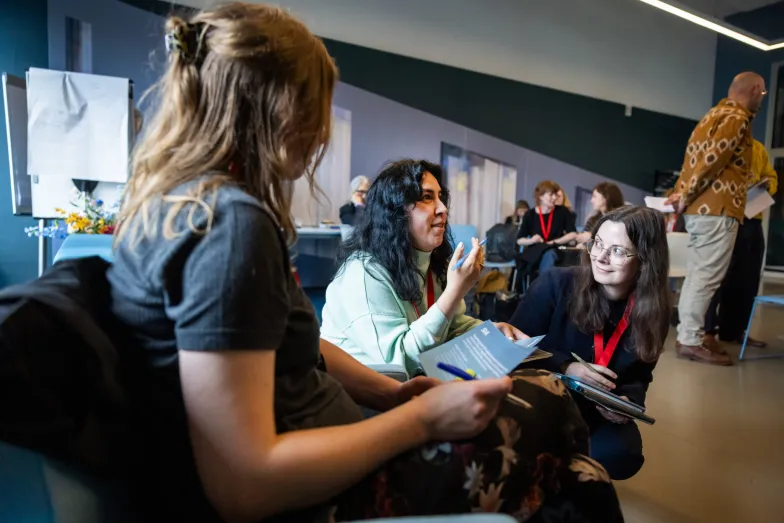
Just launched: Impossible Projects – the Podcast

The Impossible Projects podcast series invites you into an ongoing conversation...
The 5 selected ideas for the Impossible Projects experimental open call

We are delighted to share that a final selection of five Ideas for our...

Warning: This is not a typical open call!

The call for Impossible Project Ideas aims to collect ‘unfundable gems’. We want...
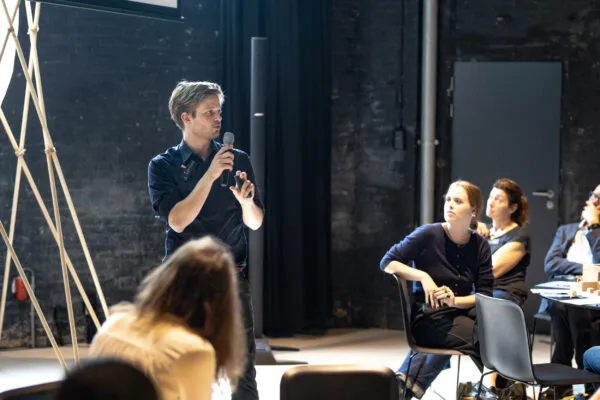
Warning: This is not a typical open call!

The call for Impossible Project Ideas aims to collect ‘unfundable gems’. We want...
Impossible Projects: what if we redesign the way we finance?

What do we consider to be “impossible” ideas or projects to finance within...
Misschien vind je dit ook interessant

Skip this slider about Misschien vind je dit ook interessant

Transition analysis and coordination structure for the sustainability of science

Making the sector more sustainable is a top priority for the knowledge sector. The goal is to achieve a collective...
De Tafels van Moedt

Science plays a role model in society, including in sustainability. ‘The Tafel van Moedt’ (“The Table of Courage”) is a...
KIN x THRIVE: Purpose Accelerator

How can we ensure that relevant research insights lead to significant societal impact as quickly and effectively as...