Dutch Climate Research Initiative (KIN) enriched with climate scientist Caroline Katsman as scientific figurehead
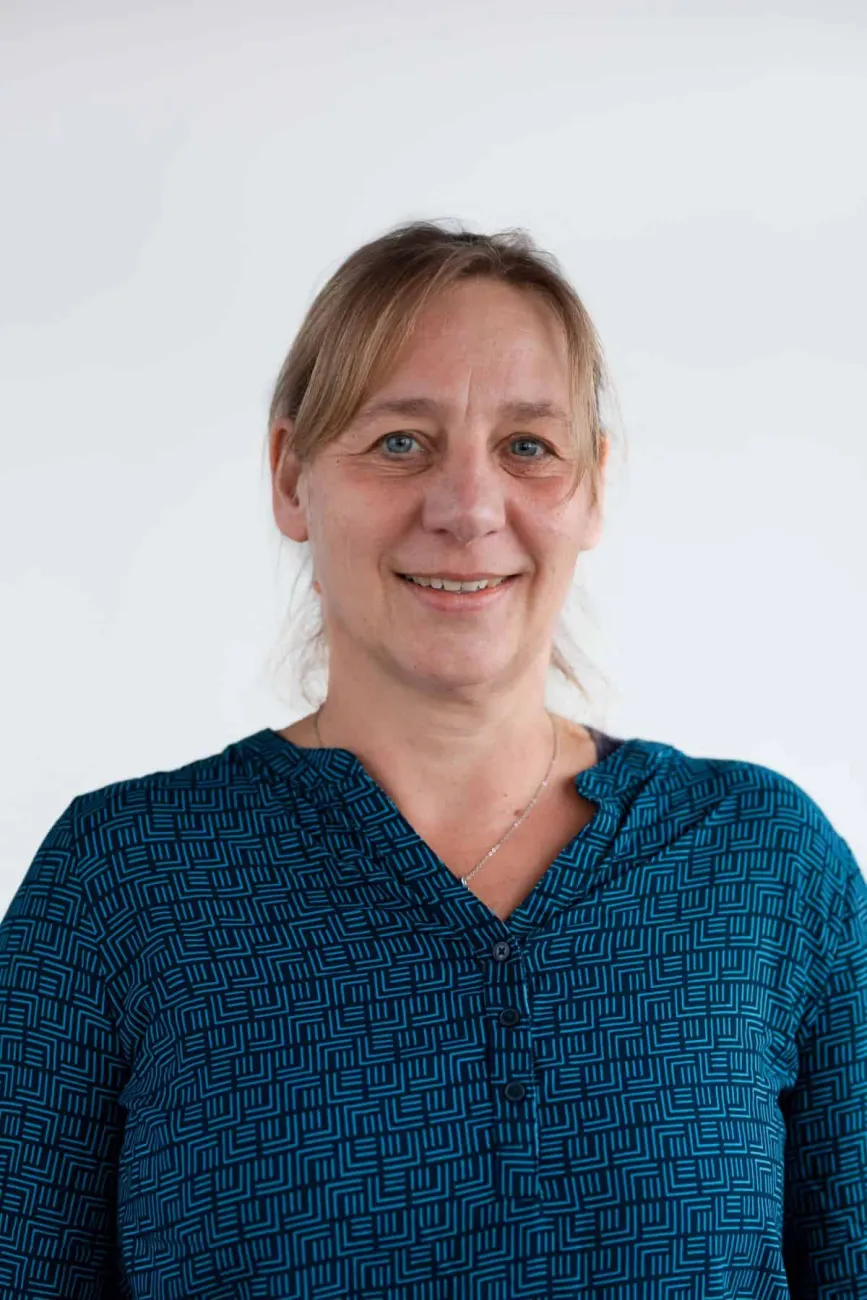
Professor of Oceans & Climate Prof. Dr. Caroline Katsman has been appointed December 15, 2024 as scientific figurehead of the Dutch Climate Research Initiative (KIN). As an internationally respected climate scientist, Caroline Katsman brings with her a large network and broad experience in applying knowledge from physical climate science to pressing societal issues. Together with Professor of Socioeconomic Transitions Derk Loorbach, also a KIN figurehead, she will give scientific direction to the KIN in the coming years. They will do this in consultation with general director Michiel van den Hout, who is in charge of day-to-day management.
Caroline Katsman, involved with the KIN from its founding phase, will focus as figurehead on initiating and connecting fundamental climate system research with KIN activities and societal stakeholders within and outside the KIN programs.
Science and industry collaboration
Caroline will chair consultations between university climate centres in the Netherlands beginning in 2025, and help shape and build the KIN’s strategic partnerships. With Caroline Katsman and Derk Loorbach, the KIN, whose mission is to accelerate climate transition by connecting science with civil society and business, sees its substantive scientific pillars, physical climate science and transition science, firmly secured in the organization. Caroline Katsman will be attached to the KIN for 1 day a week.
Ocean swirls; investigating unknown impacts
Caroline Katsman is a professor of Oceans & Climate at the Faculty of Civil Engineering and Geosciences at Delft University of Technology (TUD) and a visiting researcher at the Institute for Marine and Atmospheric Research Utrecht (IMAU) at Utrecht University. Her research focuses on large-scale circulation of ocean currents and the role they play in our climate. Caroline Katsman received her PhD from Utrecht University with research on wind-driven ocean circulation partly conducted at KNMI (Royal Netherlands Meteorological Institute). From 2003 to 2013, she worked as a climate researcher at KNMI developing sea level rise scenarios for the Dutch coast to support policy strategies for coastal defence, including for the new Delta Commission. For her research on the unknown impact that ocean eddies have on how the Atlantic Ocean responds to climate change, she received an NWO Vidi grant in 2013.
“As a climate scientist, I have long been aware of the serious climate changes and associated challenges facing us. At the same time, it is evident that more is needed than just the ‘hard numbers’ provided by climate physicists to translate this knowledge into policy that contributes to a transition to a more sustainable society. The KIN makes that connection and takes a bold, radically different approach; a break in trend that I believe is badly needed and to which I am happy to contribute. In the collaboration with Derk Loorbach, I already notice that this tandem of climate and transition science works excellently, in terms of content but also, for example, in interpreting each other’s’ language. This enables the KIN to operate even more efficiently.”
“Caroline’s knowledge of and experience in fundamental climate research is invaluable for further expanding our activities and increasing the impact of the KIN. Caroline has a strong track record in translating scientific knowledge into societal urgency and action. Issues that the KIN and our partners also face. The complementarity of Caroline Katsman and Derk Loorbach as scientific figureheads enables us to bring the KIN sharply on track in terms of content.“
“I am very much looking forward to our collaboration, as joint figureheads we can translate climate science into societal transition and turn this into action. Caroline can bridge the gap to social science and policy with her knowledge of climate change and research. We also hope to give climate science a new position in which research focuses more on supporting transitions and make the KIN team a real driver of climate transition.”
Related news
Three years of KIN. Three leaders. One mission: to drive and embed the climate transition.
Last Sunday, November 1, 2026, the Netherlands Climate Research Initiative (KIN)...
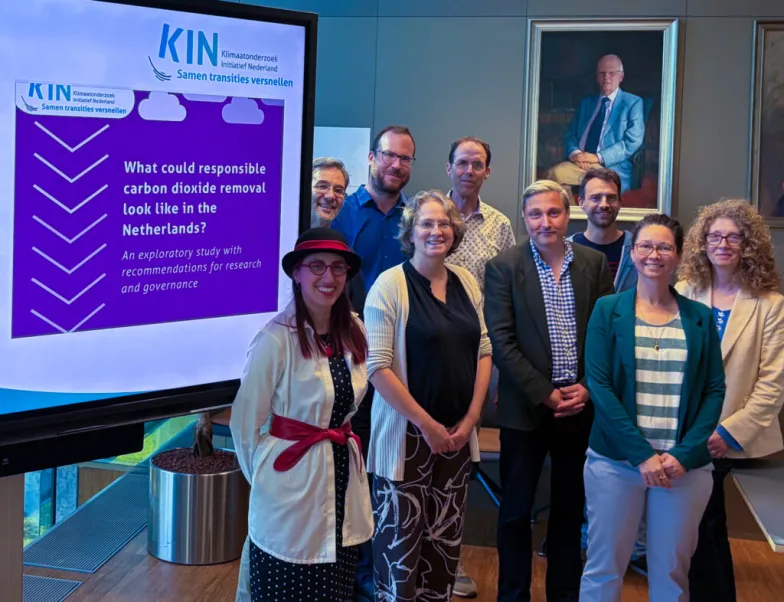
Report examines the environmental and social aspects of large-scale carbon dioxide removal
There is a strong national and international focus on large-scale carbon dioxide...
New report guides science sector in becoming more sustainable
From research institutes, colleges and universities to university medical...
Climate knowledge seeks policy maker
How can we make scientific knowledge more accessible to policymakers?
This...
Pick up the phone and call our Hotline for Intangible Impact
When KIN funds projects, supports workshops, events or KIN Pact activities, it...

New opportunity for Caribbean climate transition networks
Express your interest in the KIN Network Funding Caribbean!
Are you working...
Call for stakeholders to contribute to a Dutch version of the IPCC Special Report on Climate Change and Cities
On 29 May 2026, the KIN organised a second expert consultation at the KNMI in De...
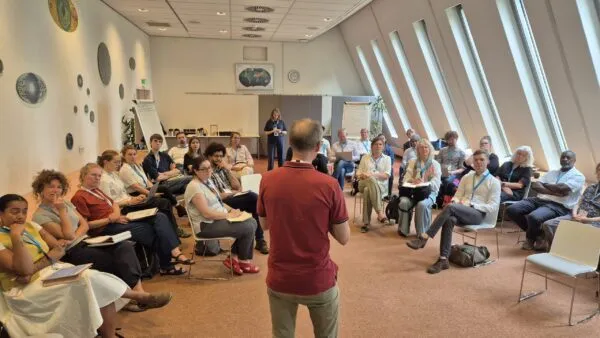
Documentary ‘Re-rooting: Indigenous perspectives on just transitions’ is now available online!
‘Re-rooting: Indigenous perspectives on just transitions’ is now available...
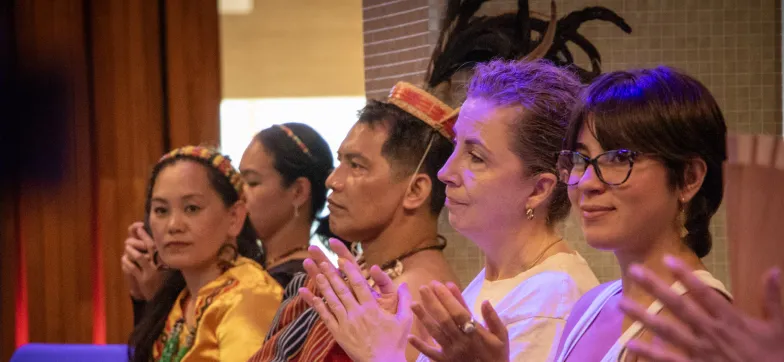
“We need to go to relationship therapy with water”
Over the centuries, our relationship with water has gone completely off the...
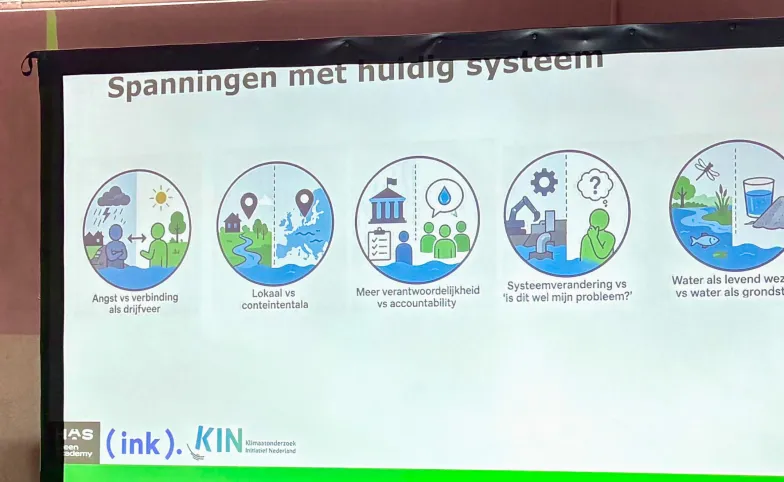
How can our economy contribute to well-being and a liveable planet? 25 projects are shaping the economic transition with the ‘Knowledge-in-Action’ grant
What does an economy look like that is not purely focused on growth, but also...
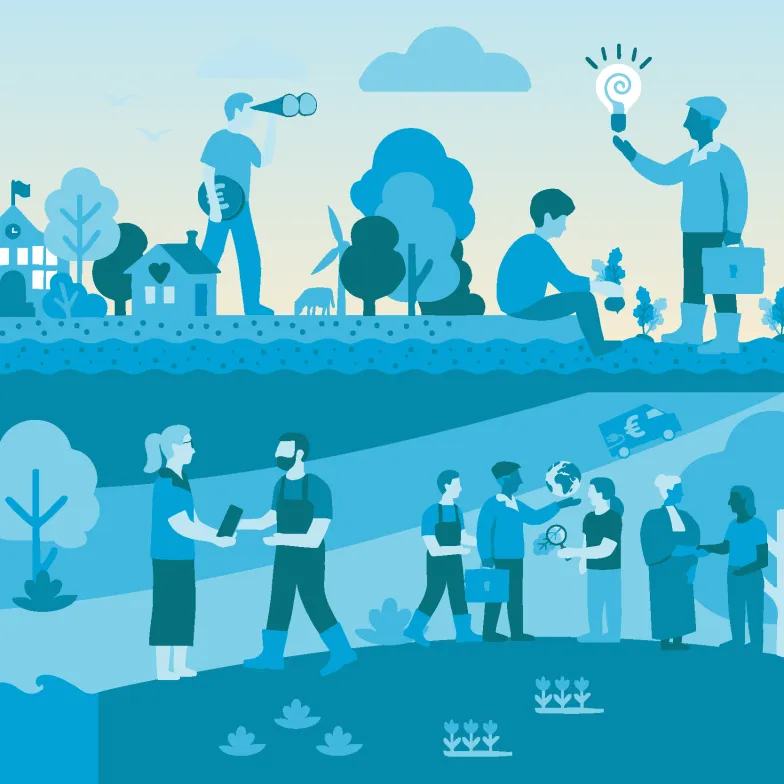
‘Impossible Projects’ workshop: researchers and funders taking on each other’s roles
On May 18, during the SIA conference ‘Research and Creative Practice’ at the...