How Was the Preparation of the WKR Report?
Last Friday, the Scientific Climate Council (WKR) presented its first advice, titled ‘Moving Forward Together,’ aimed at a climate-neutral and climate-resilient future. The WKR advises based on scientific insights, remaining independent and interdisciplinary.
The advice to the government concerns the Climate Plan 2025-2035, urging the government to centralize a broad and shared vision of a climate-neutral and climate-resilient Netherlands in the Climate Plan. Choices should be based on this vision to expedite becoming climate-neutral and climate-resilient, contributing to economic opportunities for the Netherlands as a trading nation and a just society.
One of the WKR members is Linda Steg, a professor at the University of Groningen. Since April, she has contributed to this report. We asked her to shed light on the process and creation of the report – both the highlights and challenges.
Tell us more about the WKR?
“In April 2023, the Scientific Climate Council was established as a new government advisory body. The WKR is tasked with advising the government and the First and Second Chambers on climate policy. The Council provides advice based on scientific insights, is interdisciplinary, and operates independently. The government is expected to publish the Climate Plan for 2025-2035 in 2024, and the WKR is requested to provide advice on this.”
What did you start with?
“We first determined the main messages and then, with a significant effort from the support staff, started writing the texts.”
What did you find challenging about the process?
“The challenging part of drafting this initial advice is that the WKR is new; we have to get to know each other and understand each other’s language because we all have different expertise. The support staff is also new and needs to get accustomed to working together. It takes time. But this way of working also has great value because you get a much better advice when you bring in different expertise. None of us could have written the advice alone in this way; it truly is teamwork.
Another challenge was the timeline – we delivered the advice earlier so that it can play a role in the formation of the government, so the time pressure was significant.”
What did you enjoy the most?
“We quickly agreed on the main points, and it’s beautiful to see that from different disciplines, we come to the same conclusions. It is very inspiring to be part of the WKR because I always try to combine scientific impact with societal impact. In the WKR, this can be achieved well. It is an enthusiastic and enjoyable group of people. I learn a lot, and it is inspiring to collaborate.”
What does the new government mean for the WKR?
“That is, of course, a big question. We hope that the new government embraces the advice; a promising perspective for a just, climate-neutral, and climate-resilient society is in everyone’s interest.”
Related articles
Three years of KIN. Three leaders. One mission: to drive and embed the climate transition.
Last Sunday, November 1, 2026, the Netherlands Climate Research Initiative (KIN)...
Report examines the environmental and social aspects of large-scale carbon dioxide removal
There is a strong national and international focus on large-scale carbon dioxide...
New report guides science sector in becoming more sustainable
From research institutes, colleges and universities to university medical...
Climate knowledge seeks policy maker
How can we make scientific knowledge more accessible to policymakers?
This...
Pick up the phone and call our Hotline for Intangible Impact
When KIN funds projects, supports workshops, events or KIN Pact activities, it...
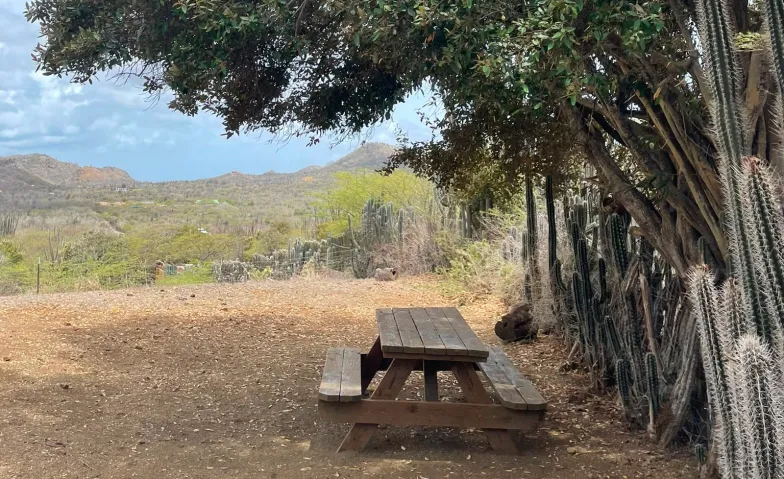
New opportunity for Caribbean climate transition networks
Express your interest in the KIN Network Funding Caribbean!
Are you working...
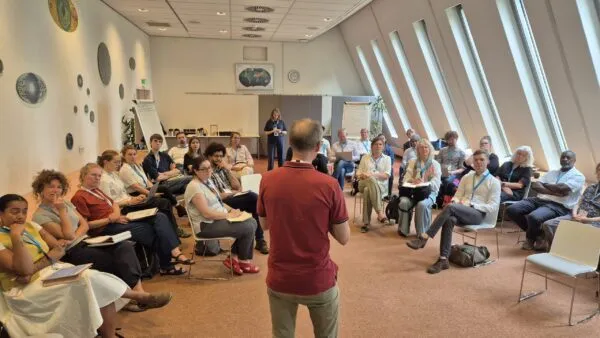
Call for stakeholders to contribute to a Dutch version of the IPCC Special Report on Climate Change and Cities
On 29 May 2026, the KIN organised a second expert consultation at the KNMI in De...
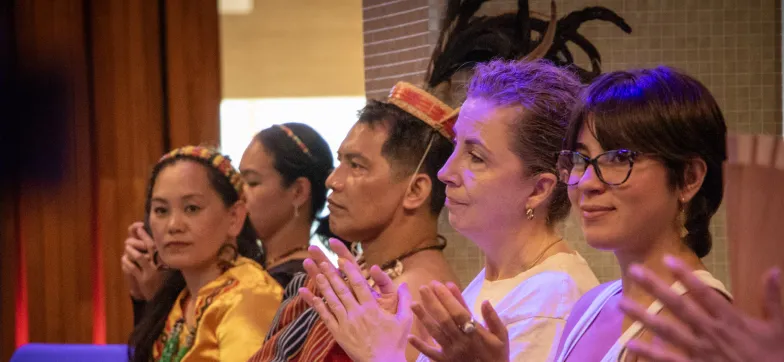
Documentary ‘Re-rooting: Indigenous perspectives on just transitions’ is now available online!
‘Re-rooting: Indigenous perspectives on just transitions’ is now available...
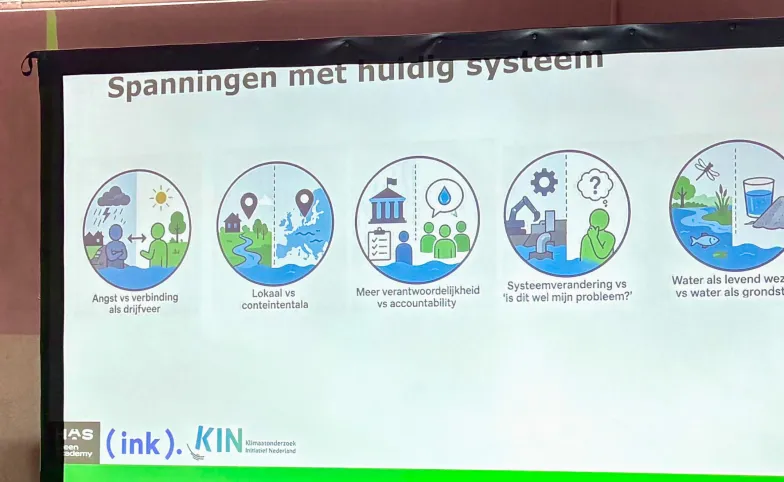
“We need to go to relationship therapy with water”
Over the centuries, our relationship with water has gone completely off the...
How can our economy contribute to well-being and a liveable planet? 25 projects are shaping the economic transition with the ‘Knowledge-in-Action’ grant
What does an economy look like that is not purely focused on growth, but also...
‘Impossible Projects’ workshop: researchers and funders taking on each other’s roles
On May 18, during the SIA conference ‘Research and Creative Practice’ at the...