Report on the First KIN Crutzen Workshop is Live: An (Academic) Reflection on the Crutzen Workshop
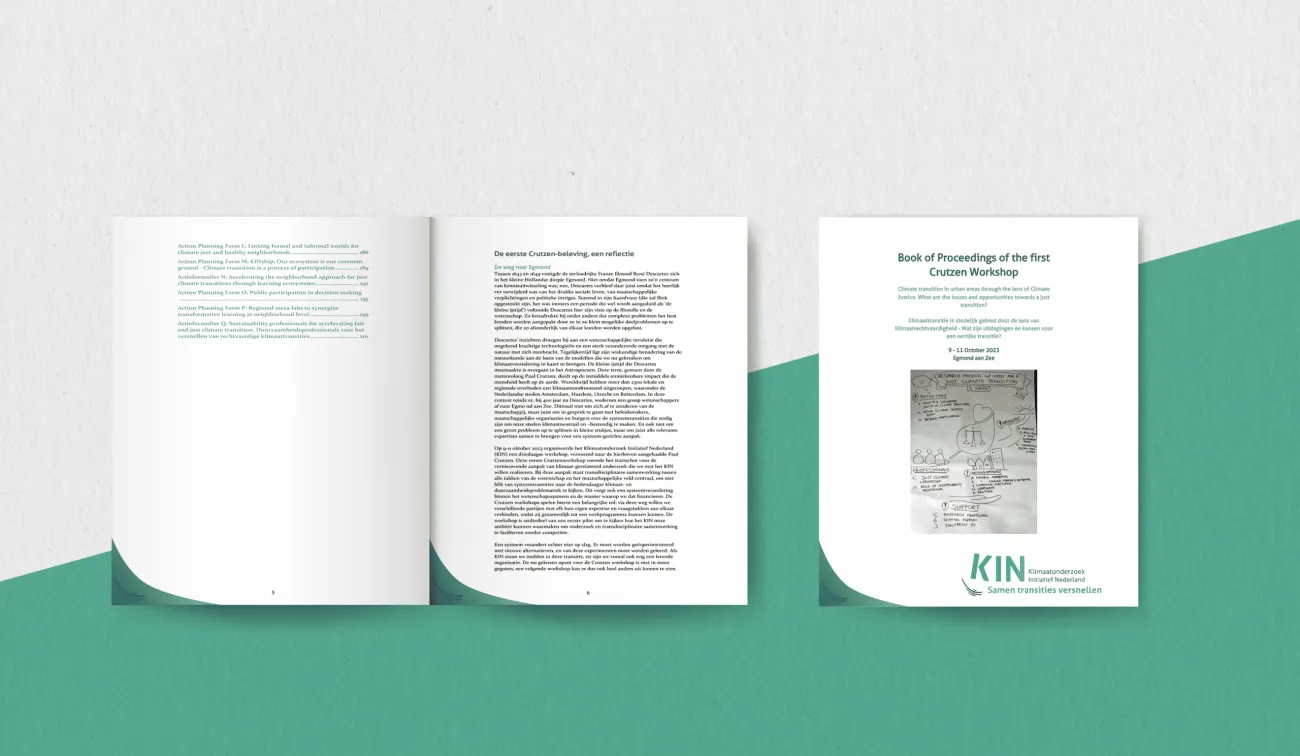
Today, we proudly present the Report on the first KIN Crutzen Workshop about the Crutzen Workshop. The report consists of an introductory essay reflecting on the workshop itself, insights from the Rathenau report, and transcripts of discussions and action plans. Simultaneously, the Rathenau Institute releases the public version of their report on this workshop. In this post, we summarize the key points of these updates.
Why are we publishing the Report on the First KIN Crutzen Workshop?
In the fall of 2023, the inaugural Crutzen Workshop took place. This post provides more details on the workshop, including a save-the-date download, and this blog shares the participants’ experiences. In essence, it was three valuable days that generated a lot of energy for the participants and for us. Many valuable insights emerged from this workshop, and we want to share them with the outside world. This is the Report on the First KIN Crutzen Workshop: a comprehensive document containing transcripts of discussions and action plans, complemented by a reflective essay. The Conference Proceedings were downloadable shortly after the workshop. The significant addition now is the integration of the Rathenau report and the reflective essay.
This document provides guidance for the participants and offers a good overview of how the Crutzen Workshop unfolded and will continue in the future. The workshop in the fall was a pilot of what a Crutzen Workshop could look like, part of a testing phase. Therefore, this document is relevant for those interested in participating in the future.
What is the Rathenau Institute?
The Rathenau Institute was present during the Crutzen Workshop to conduct an analysis. The Rathenau Institute engages in research and debate on the impact of science, technology, and innovation on society. With climate, health, and knowledge for transitions as three of the five themes, this collaboration was tailor-made.
What Have We Taken Away from the Rathenau Report?
After the workshop, we received an internal report with observations, an in-depth analysis, and concluding remarks and recommendations. This has now been transformed into a public version. The report also shares more about how the workshop came about, the choice of open space technology, and the main question.
An example of a recommendation we will act on is the clear prioritization of objectives. From the KIN’s perspective, the idea was that the workshop would lead to a work package and serve as a prelude. However, the interviews conducted by the Rathenau Institute revealed that participants considered topics like financing less important; they found networking and collaborations more crucial. A lesson we take from this for future workshops is to provide more clarity on this from the outset.
Read the Report on the First KIN Crutzen Workshop
Containing an introductory essay, reflection on the Rathenau report, and transcripts of discussions + action plans.
Read the Rathenau Report
Including the background, explanation of methodology/technology, question/method, observations, analysis of the role of power in the workshop, and conclusions.
NB: Conversations during the workshop are published alternately in Dutch and English. We have kept the transcripts in the language of creation by the participants and have not translated them. However, our own communication (essay, reflection, and Rathenau report) is in Dutch. A translation of this is available upon request.
Related news
Three years of KIN. Three leaders. One mission: to drive and embed the climate transition.
Last Sunday, November 1, 2026, the Netherlands Climate Research Initiative (KIN)...
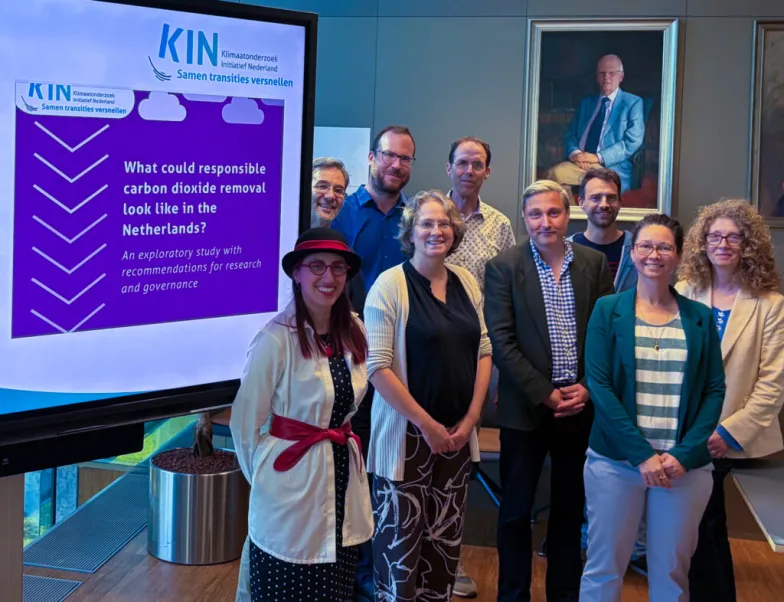
Report examines the environmental and social aspects of large-scale carbon dioxide removal
There is a strong national and international focus on large-scale carbon dioxide...
New report guides science sector in becoming more sustainable
From research institutes, colleges and universities to university medical...
Climate knowledge seeks policy maker
How can we make scientific knowledge more accessible to policymakers?
This...
Pick up the phone and call our Hotline for Intangible Impact
When KIN funds projects, supports workshops, events or KIN Pact activities, it...

New opportunity for Caribbean climate transition networks
Express your interest in the KIN Network Funding Caribbean!
Are you working...
Call for stakeholders to contribute to a Dutch version of the IPCC Special Report on Climate Change and Cities
On 29 May 2026, the KIN organised a second expert consultation at the KNMI in De...
Documentary ‘Re-rooting: Indigenous perspectives on just transitions’ is now available online!
‘Re-rooting: Indigenous perspectives on just transitions’ is now available...
“We need to go to relationship therapy with water”
Over the centuries, our relationship with water has gone completely off the...
How can our economy contribute to well-being and a liveable planet? 25 projects are shaping the economic transition with the ‘Knowledge-in-Action’ grant
What does an economy look like that is not purely focused on growth, but also...
‘Impossible Projects’ workshop: researchers and funders taking on each other’s roles
On May 18, during the SIA conference ‘Research and Creative Practice’ at the...