

At the end of last year, KIN launched a tender process inviting knowledge institutions (individually or as regional partnerships) to express their interest in participating as pilot locations (KIN Hubs) to strengthen regional transition capacity. Within this pilot, KIN wants to explore, together with knowledge institutions and partners, how transition-oriented and transformative working can be structurally embedded in the region.
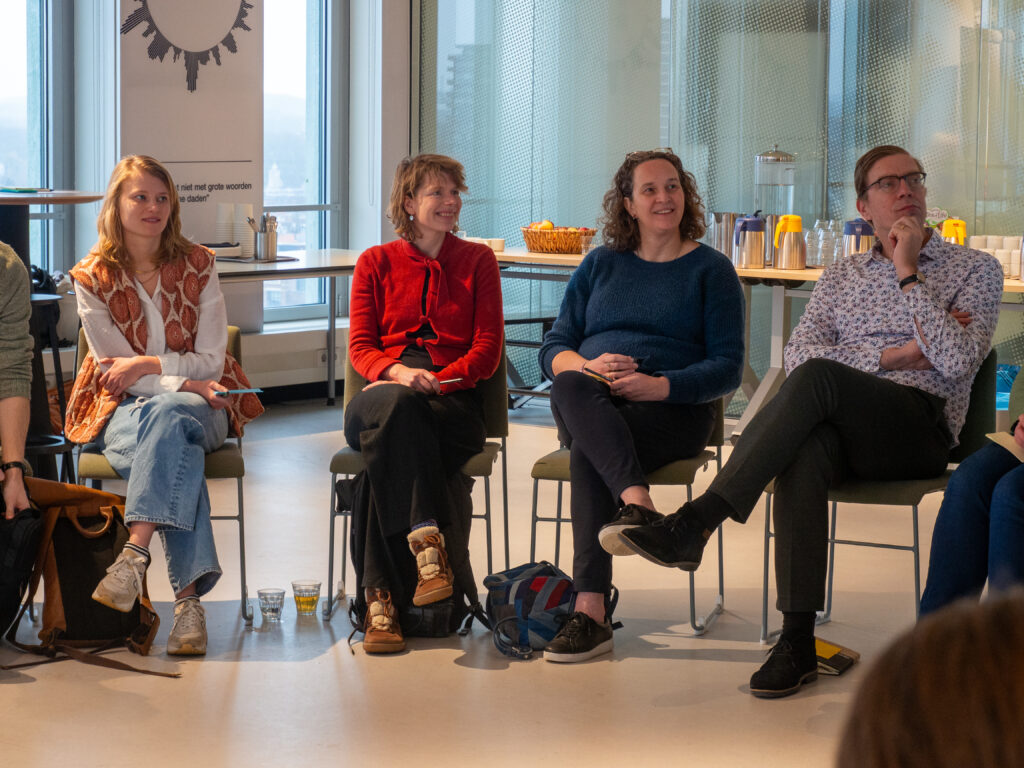
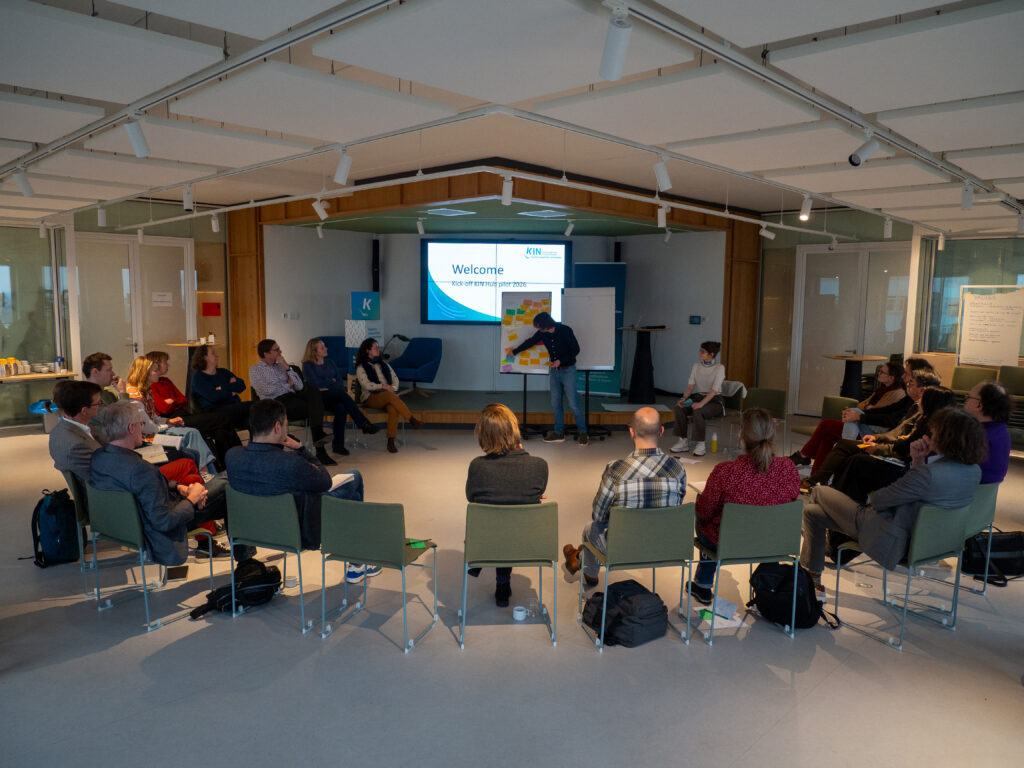
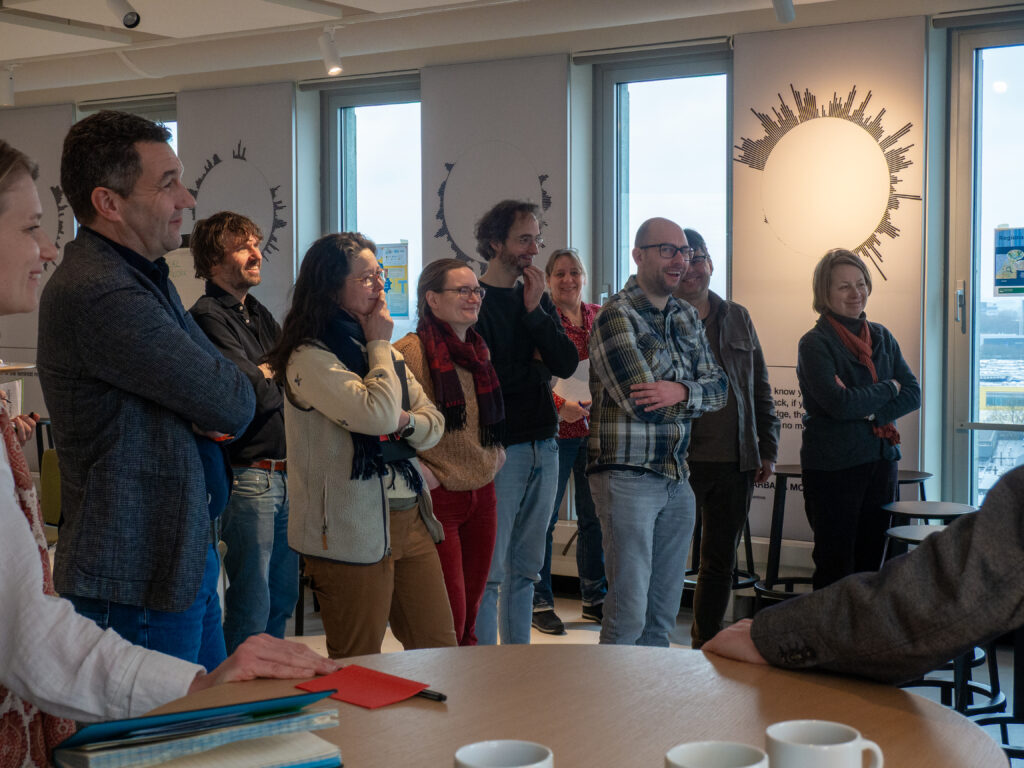
On 19 February 2026, the KIN Hubs selected for this pilot met for the first time. The aim of the day was to lay a joint foundation for the coming period. Not only to make plans, but also to explore a way of working together that is in line with transition-oriented and transdisciplinary working.
The ambition is clear: to create a basic infrastructure and culture for transition-oriented working with a visible impact on social transitions and within the knowledge institutions themselves.
Transition-oriented working is demanding. For the academic world, it means a new way of working that requires new skills, but also space and appreciation for transdisciplinary working and knowledge sharing. The formation of the KIN Hubs is intended to stimulate this and to jointly investigate how the KIN Hubs (and beyond) can develop into a sustainable, visible and impactful network.
Three building blocks for 2026
In the afternoon, participants worked in three theme groups to establish an initial foundation.
1. Training
A common foundation of transition knowledge and skills, supplemented with local practice and regional accents. Themes such as unlearning, dealing with tensions, reflexivity, trust and learning to navigate between systems were emphasised. Training is not an end in itself, but part of a broader learning movement.
2. Governance & long term
A transparent narrative about where we want to go – including in terms of governance. This includes room for experimentation, recognition and appreciation, and the idea of KIN Fellows to allow knowledge and capacity to circulate between regions.
3. Translocal network
How do local networks remain vital and connected? Think of joint programming, coordinators as linking pins, mutual visits and utilising each other’s expertise. We will also closely involve the climate centres that are not yet part of the pilot programme.
Working from shared values
In addition to content, there was a strong focus on the way of working together. Openness, transparency about choices made, awareness of different interests, action-orientedness and utilising everyone’s competence emerged as core values. Including room for sparring – and sometimes a bit of tug-of-war.
Collaboration was aptly described as a blend: you add something, but you also retain your own identity.
And what next?
In the coming period, the KIN Hubs will continue to work on:
- concretising the plans for each theme;
- structural consultation moments (online and live);
- mutual visits;
- implementation within their own organisation(s);
- discussions with regional partners.
The goal: to set up a training programme, governance structure, and long-term strategy together.
The kick-off was a great start and basis for the collaboration. The challenge now lies in realising the ambition — with courage, focus, and action so that the activities truly contribute to transition.