


A co-created documentary and dialogue initiative on Indigenous principles for just climate futures
More than a documentary, Re-rooting is a space for listening, dialogue, and collective reflection on Indigenous knowledge, climate justice, and the futures we choose to create together.
Watch the documentary
🎥 Watch Re-rooting
About the documentary
What if the climate transition were led by Indigenous principles?
Re-rooting is a co-created documentary and dialogue initiative developed through a collaboration between Myra Colis, Anna Melnyk, Laure Herpain and the Indigenous Liberation Month × Just Transitions Working Group of the KIN-Pact Network.
The initiative emerged from a shared commitment to creating spaces where Indigenous knowledge, academic research, artistic practice and lived experience can meet in dialogue. Rather than speaking about Indigenous communities, Re-rooting was created with Indigenous collaborators through a process grounded in reciprocity, trust, mutual learning and co-creation. Through conversations, storytelling, and collective reflection, the documentary explores how Indigenous principles of reciprocity, responsibility, intergenerationality, relationality, and interconnectedness can inspire more just approaches to climate action, sustainability transitions, and our relationships with each other and the more-than-human world.
Rather than offering definitive answers, it invites viewers to reflect on whose knowledge is recognised, whose voices shape environmental decision-making, and what it means to imagine climate futures rooted in justice.
Voices
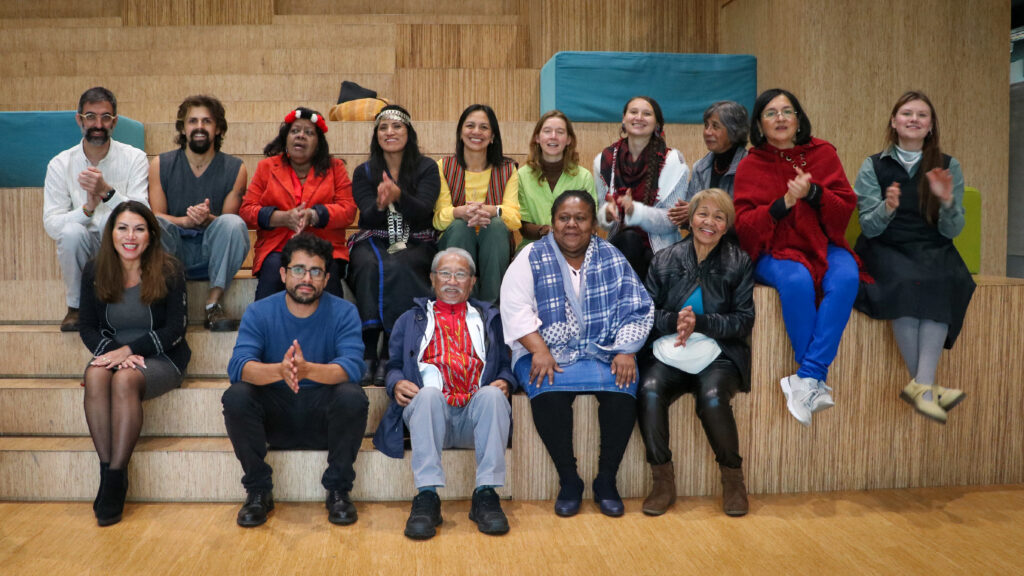
The documentary features the voices and experiences of Indigenous knowledge keepers, community leaders, researchers, and practitioners:
● Sarah Pardede (Indigenous Toba Batak)
● Semuel Sahureka (Indigenous AlifURU)
● Myra Colis (Indigenous Igorot)
● Carolina Sanchez De Jaegher (Indigenous descendant scholar)
● Skylar Joseph (Indigenous Sicangu Lakota)
● Diana Vlet (Indigenous Lokono & Warao)
● Cesar Taguba (Indigenous Igorot)
● Audrey Christiaan (Indigenous Kariña)
● Yvonne Belen (Indigenous Igorot)
● Etta James (Indigenous Arawak)
● Fatima Delgado Medina (Lecturer & Researcher)
● Anna Melnyk (Climate Ethicist)
Together, these voices offer a collective reflection on justice, belonging, environmental stewardship and more plural ways of imagining our shared climate futures.
More than a documentary
Re-rooting was designed not only to be watched but to create spaces for dialogue. Each screening is accompanied by facilitated conversations that encourage participants to reflect on Indigenous perspectives, climate justice, decoloniality, technology and sustainability transitions.
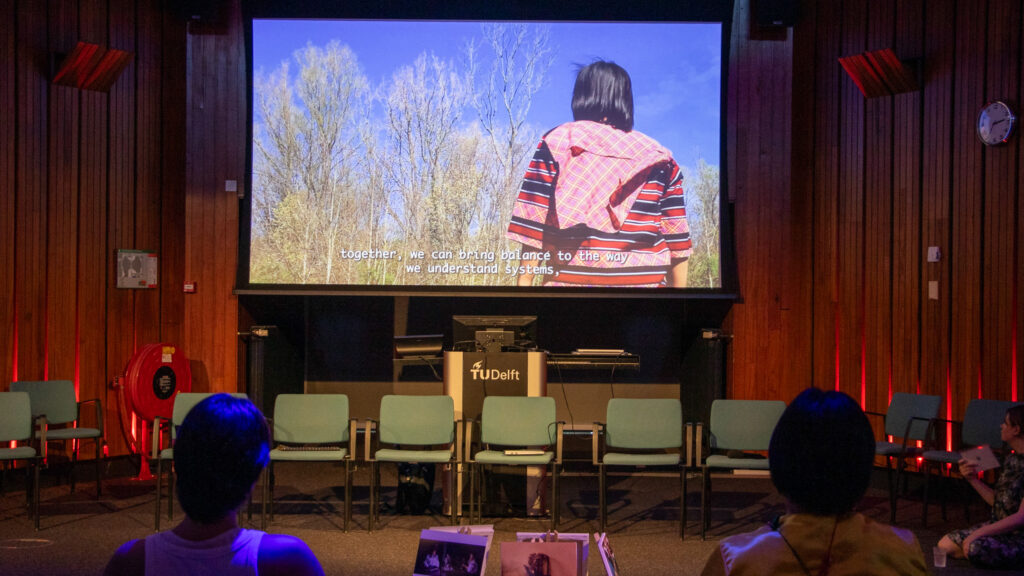
Since its premiere, the documentary has been screened at festivals, museums, universities, conferences, and art–science events across Europe, where the conversations have become as important as the film itself.
Screenings have taken place at the Je Geeft me Vlinders Festival (Utrecht), the Social Science and Humanities in Energy Conference 2026 at ETH Zürich, the Breaking Cage Art–Science Residency (France), the Sonneborgh Museum, and events organised by the TU Delft Design for Values Institute.
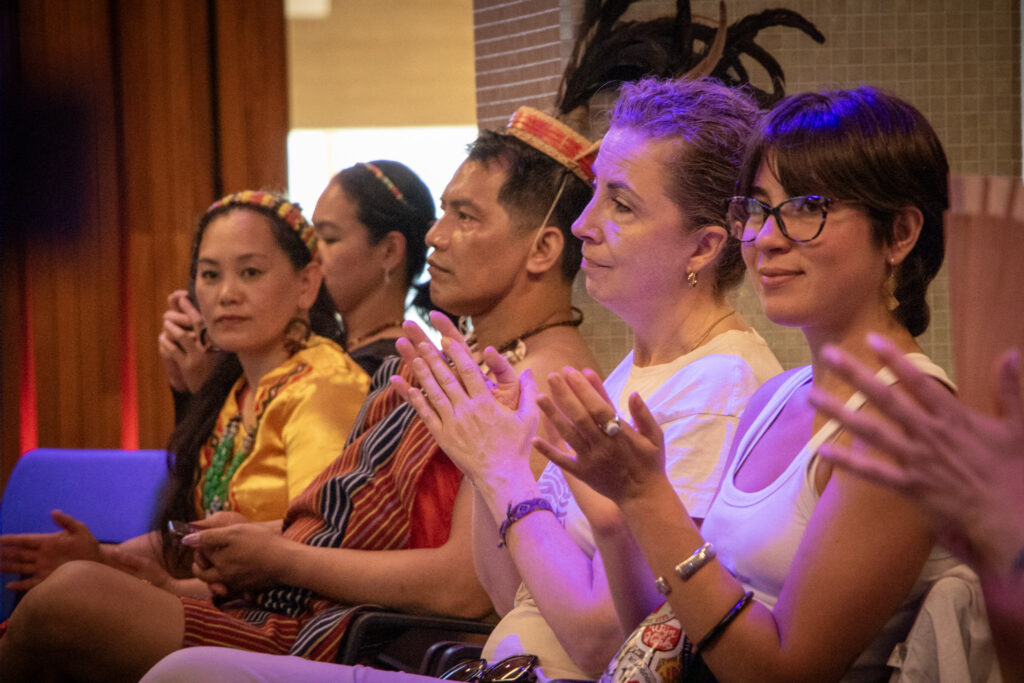
As one participant reflected:
“If someone wants unity and common ground in the global transition and Indigenous liberation, this is the most impactful yet accessible way to meet, reflect and learn. Well organised, open, and motivating to face the challenges. A great way to meet, connect with others with justice and human values in mind.”
— Bernhard
Another participant shared:
“The film was thought provoking and opened up a rich set of questions on what it means to include Indigenous perspectives in the green transition. It left me questioning what counts as legitimate knowledge, what genuine inclusion looks like, and whether recent efforts to incorporate Indigenous perspectives represent meaningful engagement or merely tokenism within systems still shaped by Western extractivist ideals. The collaborative and open discussion following the screening was a highlight in its own right.”
— Luna Frank
Reflecting on one of the facilitated workshops, Izzy Arrendell wrote:
“The workshop was a beautiful connective experience. The film was touching and eye-opening. Being able to exchange thoughts and communicate about the experience with those who shared their stories so vulnerably was priceless.”
Continue the conversation
Re-rooting was created not only to be watched but also to inspire dialogue. Whether you are viewing the documentary individually, in a classroom, with colleagues, or as part of a community gathering, we invite you to continue the conversation by reflecting on some of the questions raised throughout the film.
Reflection questions
● What does a just climate future mean to you, and whose voices shape that vision?
● How do Indigenous principles such as reciprocity, responsibility, intergenerationality, relationality, and interconnectedness challenge or enrich dominant approaches to climate transitions?
● What forms of knowledge are often overlooked in environmental and technological decision-making? How might recognising more diverse ways of knowing transform these processes?
● How can collaboration between Indigenous communities, researchers, artists, policymakers, and practitioners become more equitable, reciprocal, and genuinely co-creative?
● What responsibilities do we have, not only towards future generations, but also towards communities whose lands, knowledge and histories continue to shape today’s climate challenges?
● After watching Re-rooting, what ideas, questions, or actions will you carry forward into your own work, community, or everyday life?
Re-rooting is intended as a resource for education, public engagement and collective reflection. We encourage educators, facilitators, researchers, students, practitioners, and community organisations to use the documentary as a starting point for meaningful conversations about Indigenous knowledge, climate justice and more just and inclusive sustainability transitions.

Host a screening and dialogue
We warmly welcome invitations from universities, museums, cultural institutions, conferences, organisations, schools and community groups interested in organising screenings accompanied by facilitated workshops and dialogue sessions. These sessions create opportunities to engage more deeply with the themes explored in the documentary and to foster meaningful conversations across cultures, disciplines, and lived experiences.
For screening and workshop enquiries, please contact Myra Colis via colismyra@gmail.com.
Developed through collaboration
Re-rooting was developed through the KIN-Pact Network Subsidy Grant (NWO) as a co-creative product of the Indigenous Liberation Month × Just Transitions Network.
The project was led by the MABIKAs Foundation (Myra Colis) in collaboration with TU Delft (Anna Melnyk) and supported by:
● TU Delft Design for Values Seed Project – Design for Values and Critical Raw Materials: Decolonial Justice Perspectives
● TU Delft Climate Action Programme Seed Project – Making “Colonial Risk” visible in Critical Raw Materials for Climate Transitions
● TU Delft Decolonial Working Group
● Het KIN
The initiative was made possible through the generosity, creativity, and commitment of Indigenous knowledge keepers, artists, researchers, students, facilitators and partner organisations who believed in creating spaces where different ways of knowing can meet, learn from one another and shape more just climate futures.
Acknowledgements
Re-rooting is the result of a genuinely co-created journey. We extend our heartfelt gratitude to every Indigenous knowledge keeper, community member, artist, researcher, organiser and collaborator who shared their stories, perspectives, creativity, and trust throughout this process.
We hope this documentary continues to travel across communities, spark meaningful conversations, strengthen relationships, and inspire more reciprocal, inclusive and just approaches to imagining our shared futures.
Join the conversation
Re-rooting is part of an ongoing journey rather than a finished project. We warmly welcome opportunities to collaborate with universities, museums, cultural institutions, schools, community organisations, artists, researchers, and practitioners interested in exploring Indigenous knowledge, climate justice and more reciprocal approaches to shaping our shared futures.
If the documentary inspires new conversations, collaborations, educational initiatives, or community actions, we would love to hear from you. Together, we hope to continue building spaces for dialogue, mutual learning and collective imagination towards more just climate futures.
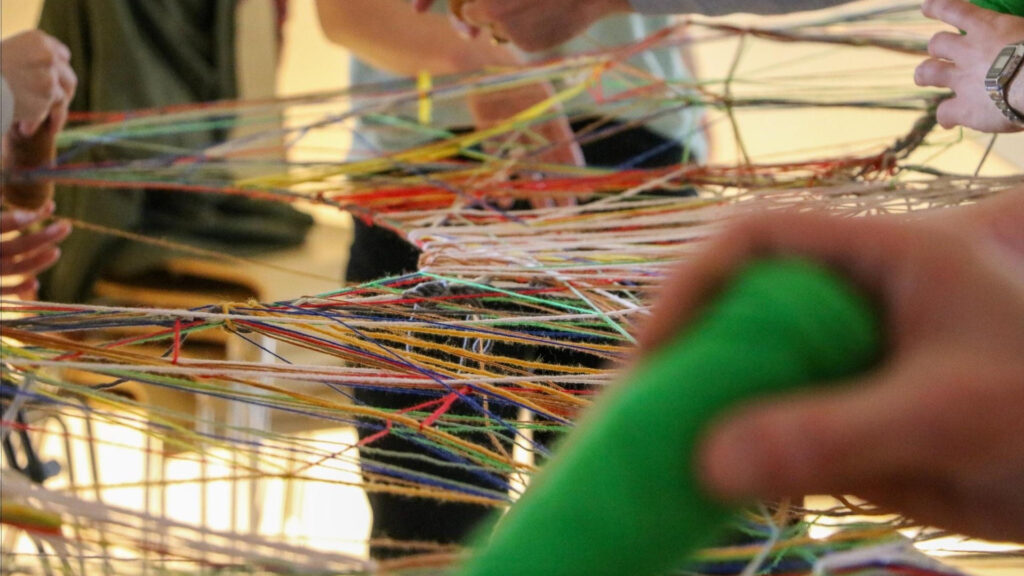
Photo credits: With gratitude to Laure Herpain for her beautiful photography featured throughout this publication.