


How can we make scientific knowledge more accessible to policymakers?
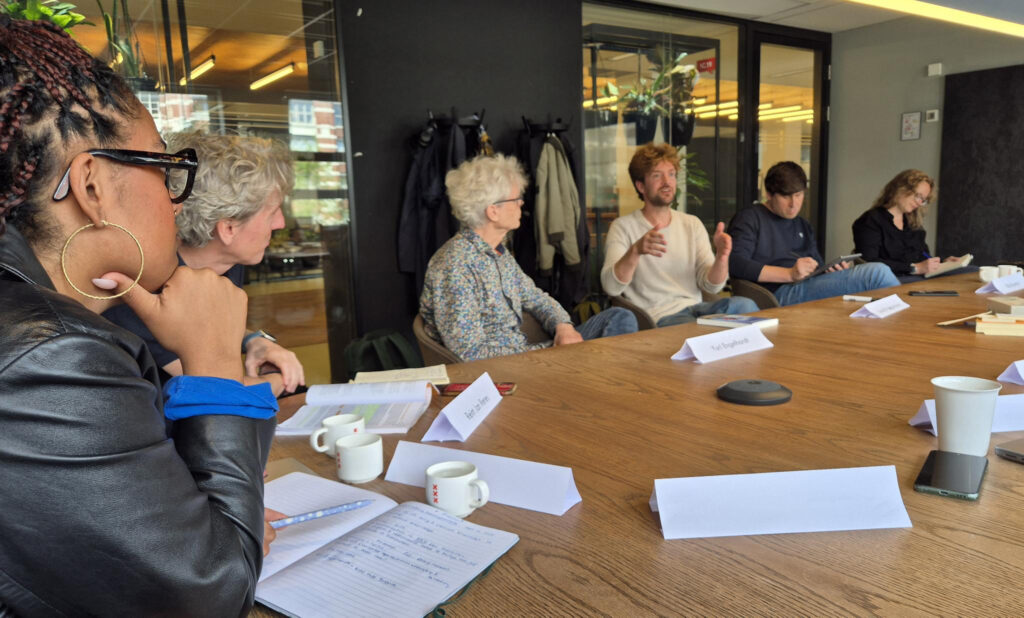
This question was the focus of attention on Wednesday, September 16, at Amsterdam City Hall, where climate researchers, climate communication experts and local policymakers gathered. With this meeting, the City of Amsterdam, the National Center of Expertise for Science & Society and the Dutch Climate Research Initiative (KIN) aim to bring together different worlds with the goal of bridging the gap between climate research and climate policy.
A number of important insights emerged during this meeting.
Better understanding of each other’s worlds
It is important to better understand each other’s worlds and to ensure that climate researchers and policymakers sit down together more often. For researchers, it is often unclear how policy is formulated, what role political consensus plays and when research can actually be applied. Municipalities, on the other hand, possess a great deal of practical knowledge. The question is how scientists can make better use of that knowledge.
The role of researchers in policy
It is also necessary to clarify the role of researchers in policy. And to examine how the fact that some researchers view themselves as objective and independent relates to policy advising. In addition, PhD students in particular sometimes work temporarily in the field at public sector organizations such as government agencies. However, more senior researchers are missing from this picture, even though their knowledge is highly valuable due to their seniority.
Climate communication that truly resonates
In addition to facts, it is important to make room for feelings and emotions in climate communication. We will examine whether this requires a different format or setting than text-based reports. Furthermore, advertising is also a form of climate communication. The question hereby is how we can best counter this.
Follow-up expert meeting
A follow-up expert meeting will be held to develop concrete solutions and proposals. The issue is urgent, and this topic calls for concrete examples, solutions and knowledge sharing. The parties involved will therefore also explore the possibility of establishing a Community of Practice focused on climate communication.
Contribute?
Are you, or do you know someone who can contribute to this based on their knowledge or experience? Or do you have any other tips? If so, please email valentina@wetenschapensamenleving.nl.