


What do we consider to be “impossible” ideas or projects to finance within climate research? And are some of these seemingly “unfinanceable gems” truly impossible, or is it our existing subsidy system that is not equipped to deal with plans that fall outside the traditional financing frameworks but may be necessary for knowledge development? Impossible Projects investigated how we could make this type of research possible and what appropriate funding would look like.
In the “Impossible Projects” project, a team from the Climate Research Initiative Netherlands (KIN), Foundation We Are, Jonas Torrens and Mattijs Taanman investigated how the funding system for climate research could make room for more transformative and transdisciplinary forms of knowledge development. The result is a new report documenting this design and learning process.
From unfundable idea to design question
Instead of launching a traditional grant call, the project began with an open call for so-called “unfundable gems”: ideas that are relevant and valuable, but difficult to fund within the current system.
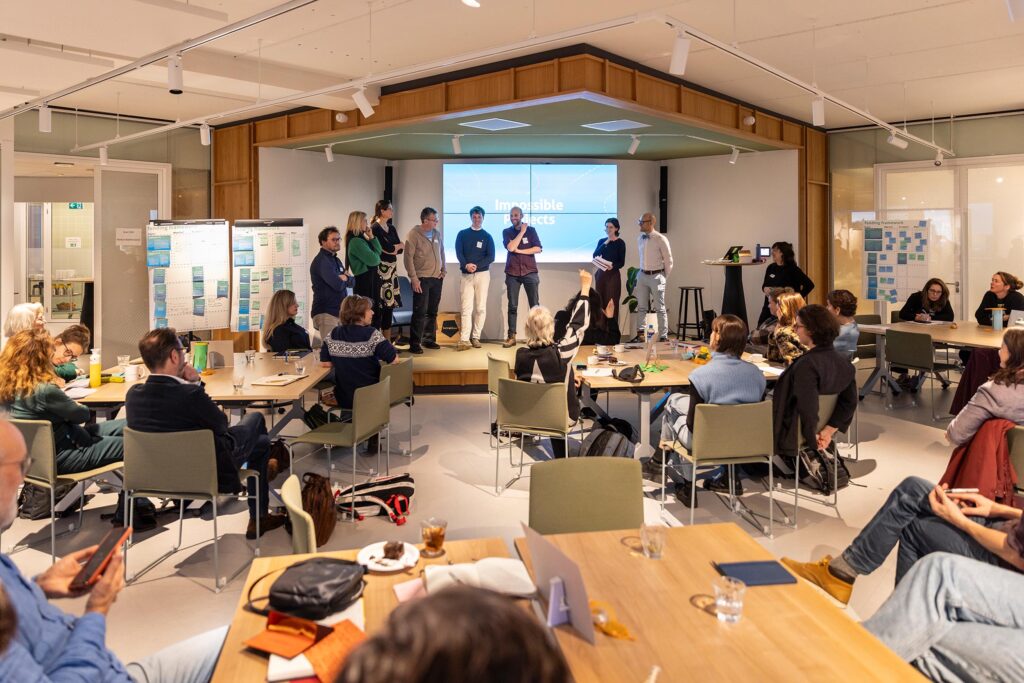
Thirty-seven ideas were submitted via an accessible audio pitch. Five of these were selected and further developed by the submitters. In a co-design session with a large group of stakeholders, including researchers, creatives and financiers, a reversal was then made via reverse engineering: rather than adapting the idea to the scheme, the scheme was designed around the idea.
The central question during the co-design session was: if we want to make this type of research possible, what would be an appropriate form of funding?
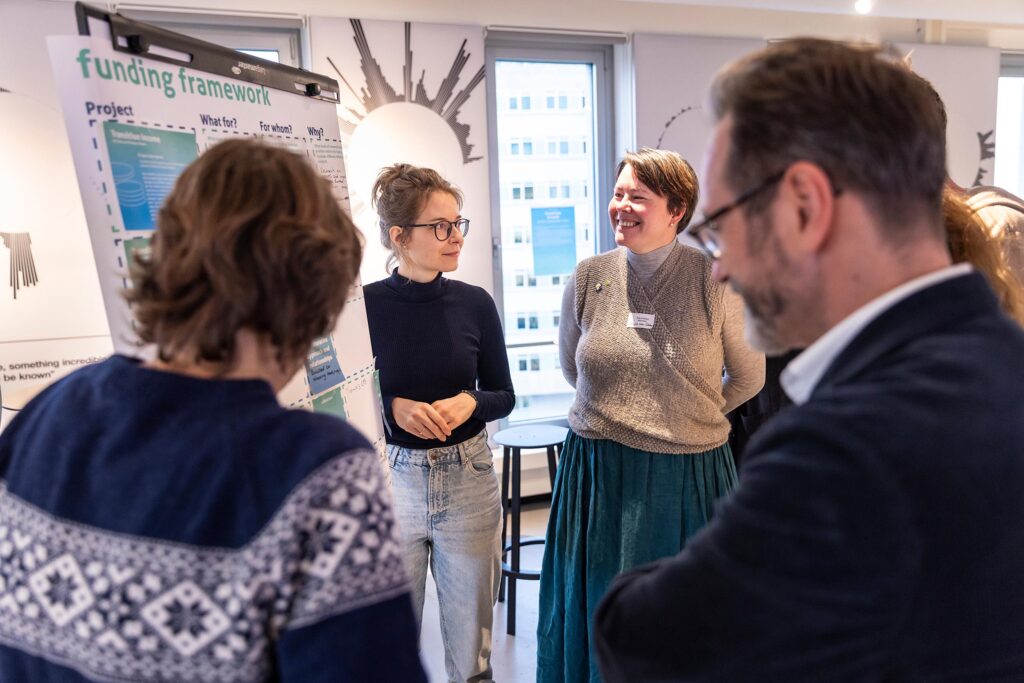
If we do want to make this kind of research possible, what would be an appropriate form of funding?
What does the report reveal?
The report highlights several structural tensions:
- Much transdisciplinary and practice-oriented research falls between existing funding streams.
- Process-driven and long-term research fits poorly within standard output and KPI logic.
- The definition of who counts as a ‘researcher’ and what qualifies as ‘research’ is narrower than current societal challenges require.
At the same time, the project demonstrates a strong capacity and willingness to rethink funding. Through open calls, podcasts and co-creation, space emerged for new language, new coalitions and alternative assessment criteria.
An invitation to explore further
This project does not offer a blueprint, but rather a design approach. The report presents concrete prototypes, recommendations and possible implementation routes. From small experiments within existing calls to system-level collaboration between funds. These formats can be further developed in the coming years by KIN/NWO and funding organisations that are curious to explore more adaptive ways of supporting transdisciplinary and transformative research. For anyone involved in shaping research funding, this is an invitation to contribute ideas about what currently seems “impossible” and how that can be changed. The New Ways of Funding team will continue to uncover as yet unknown wishes. More information on this will follow shortly.
Stay tuned!
Through the monthly KIN newsletter, you can stay informed about developments related to this project. If you are not yet subscribed, you can sign up at the bottom of this page.
Would you like to stay updated on all activities related to Impossible Projects and the New Ways of Funding team, and possibly get involved yourself? Sign up here for the dedicated mailing list.
The full report can be read here as a flipbook:
Photos by Barbara Medo