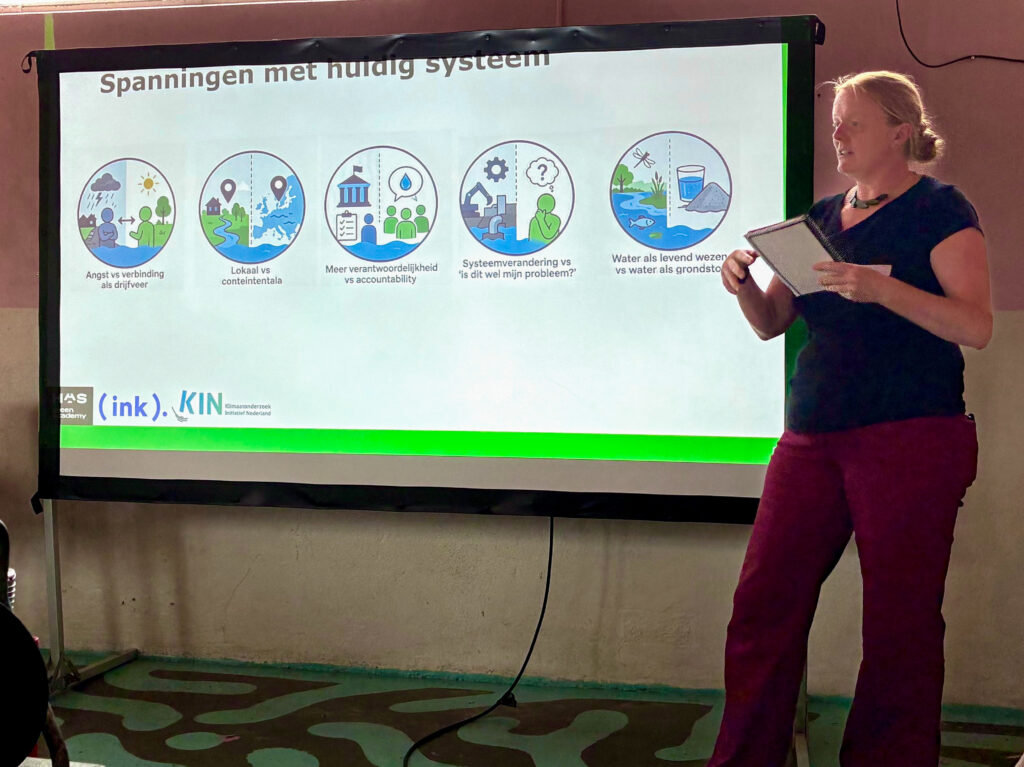



Over the centuries, our relationship with water has gone completely off the rails. It has been viewed as an enemy that must be kept outside our doors at all costs using dikes, dams and storm surge barriers. Water is also primarily seen as a commodity rather than a living system.
“We really need to go to relationship therapy with water,” said Anna Noyons (Ink Social Design), in conversation with designer Anouk van der Poll during the panel discussion on ‘our changing relationship with water.’
Technical water management
Furthermore, we often don’t realize everything that goes into the (technical) management of water. We take water coming out of the tap for granted and assume it’s free. And we don’t really give much thought to other uses of water either.
Marnix van der Kruis from Waterschap De Dommel: “People have no idea what happens when you flush the toilet; as a water authority, we’ve taken full responsibility for this and relieved everyone of their concerns. But maybe we may have been too successful in this regard. How can we, as a water authority, convey the urgency of what’s coming our way? That’s a problem we’re currently grappling with.”
Water transition
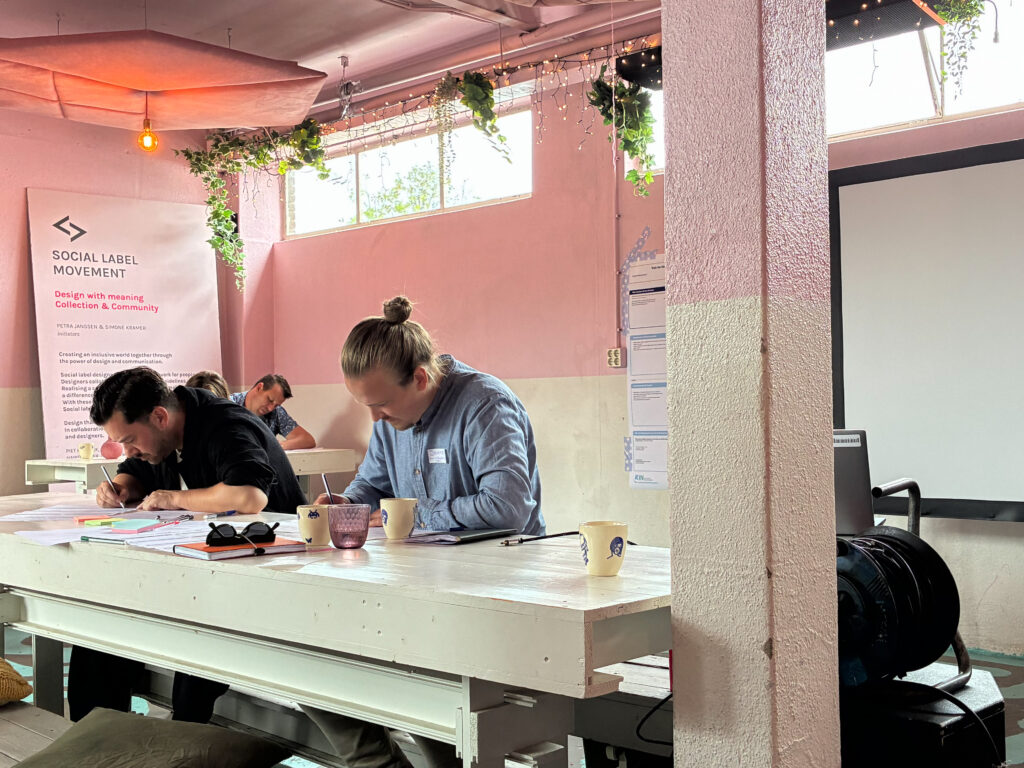
These topics and more were discussed last Thursday, July 2, during the KIN meeting as part of the ‘Collective Water Management‘ Knowledge-in-Action program, organized by Lectoraat Klimaatrobuuste landschappen, HAS green academy and Ink Social design. Researchers, water authorities, government agencies and industry partners gathered to share updates on the various projects and look ahead together.
During the meeting, it became clear that the water transition requires not only technical innovations, but also a different way of thinking and collaborating. After all, the greatest challenges lie not only in technology, but also in collaboration, ownership, governance, transparency, equitable financing and a hopeful narrative in which water is viewed as a living system.
Systems analysis
Frederike Praasterink also emphasized the importance of conducting a systems analysis. This clarifies exactly where we stand within the system, what aspects we are optimizing, and the most important question in this regard: whether those efforts are actually transformative for the system.
By sharing and connecting knowledge, experiences, and insights from the fields of science, policy, and practice, a shared vision for future action emerges.