


New report offers science sector guidance to become more sustainable
From research institutes, colleges and universities to university medical centers, the knowledge sector is eager to become more sustainable. Commissioned by NWO and the Dutch Climate Research Initiative, and on behalf of the Sustainability Working Group of Dutch universities and universities of applied sciences, the Rathenau Institute and Het Groene Brein conducted a study to determine what changes are needed within the system to make the sector more sustainable. The report identifies the greatest barriers and opportunities, highlights which stakeholders play a key role and outlines what is needed to embed sustainability in education, research and daily practice.
Transition analysis: systemic sustainability of the science sector
The science sector is fully committed to becoming more sustainable and there are numerous initiatives aimed at achieving this.
The recent manifesto ‘Thinking Sustainably, Acting Sustainably’ enjoys broad support, and initiatives demonstrate that research, education and daily practice can be carried out differently.
However, the study by the Rathenau Institute and Het Groene Brein shows that this is a complex systemic challenge. At the same time, the report provides appropriate, transition-oriented guidance.
Four policy levers to adjust
All parties play an important role in the process of becoming more sustainable: from researchers to funders, from sustainability coordinators to faculty members, and from universities and research institutes to universities of applied sciences.
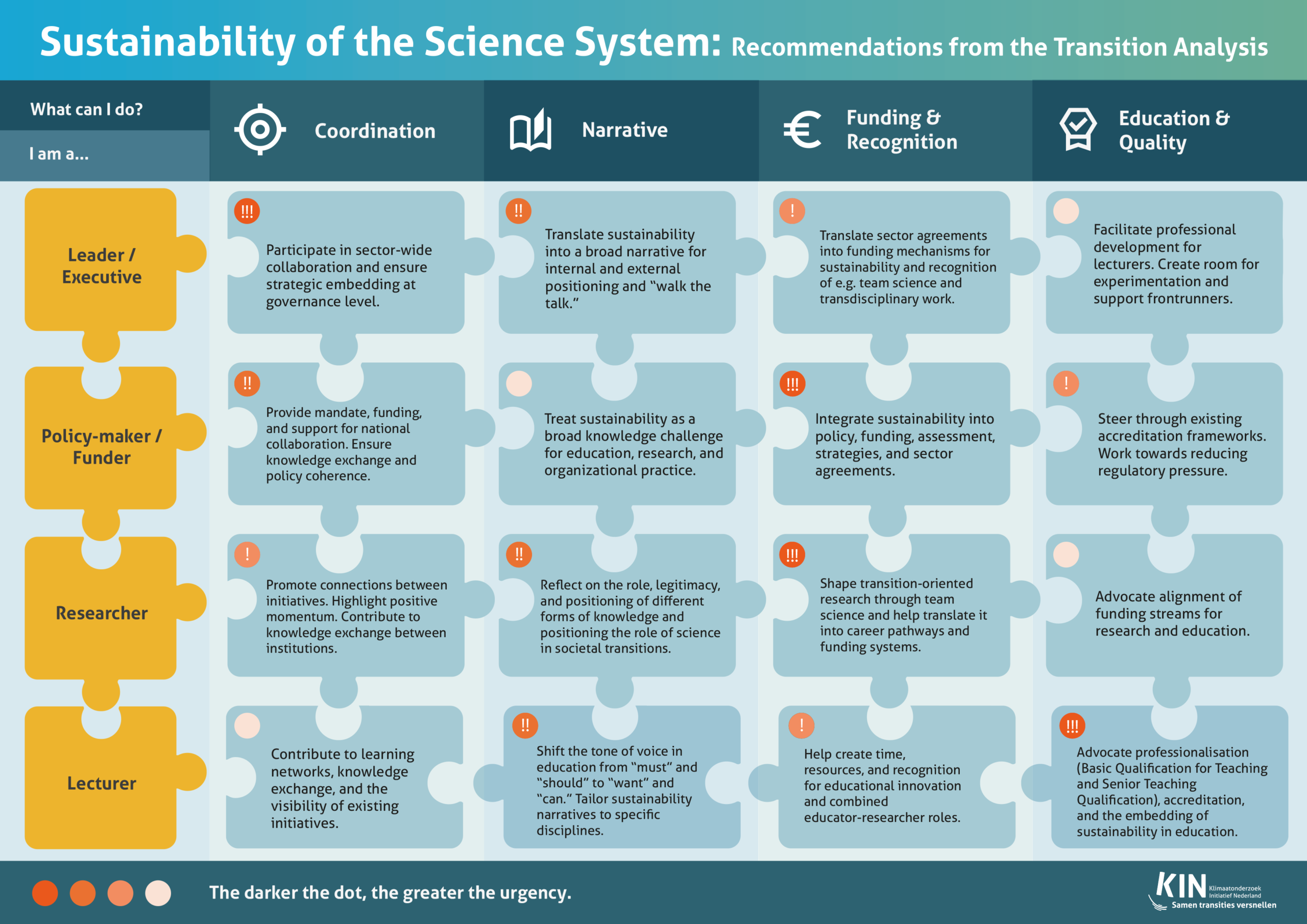
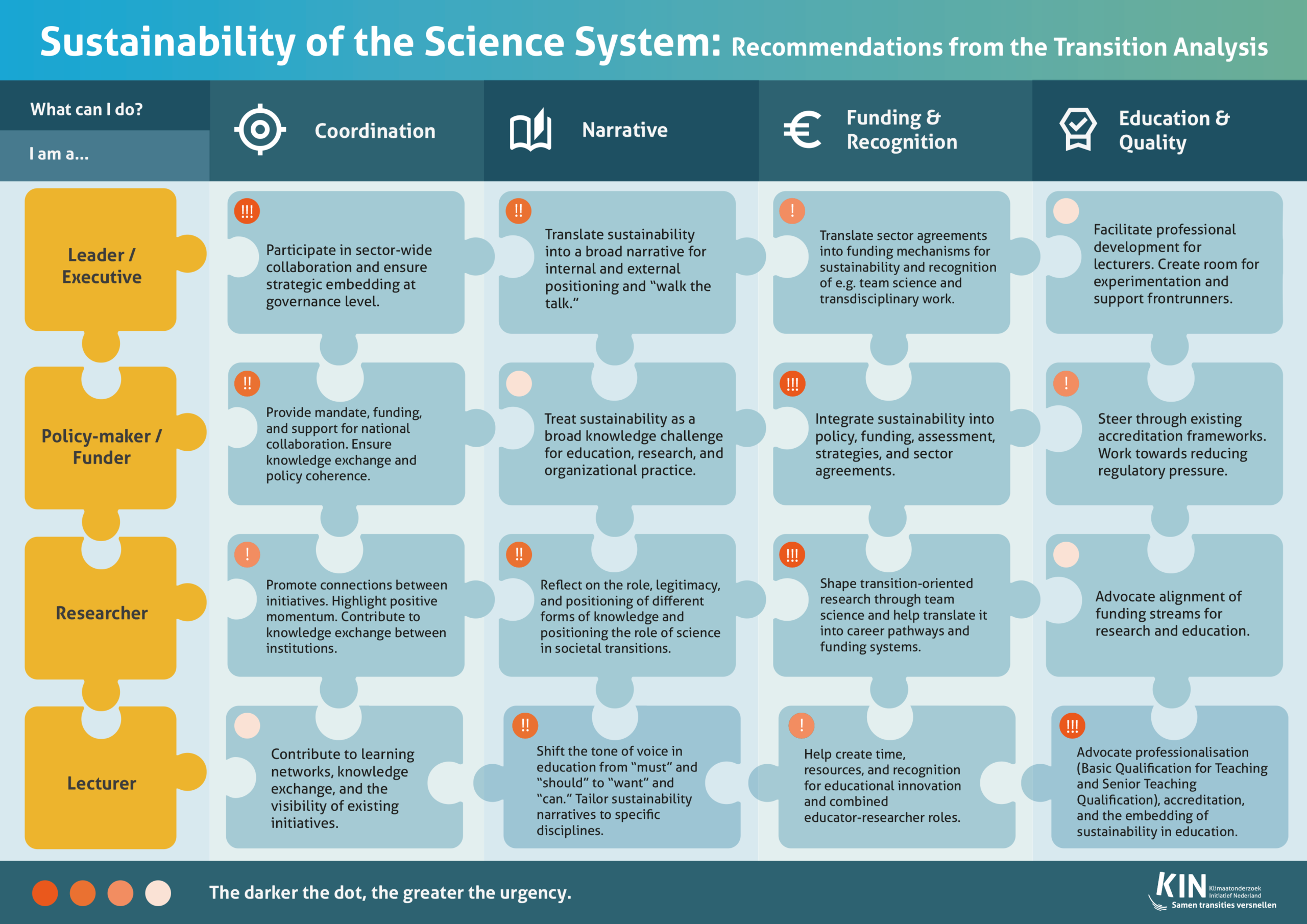
The accompanying infographic summarizes the HGB/Rathenau report and outlines the policy levers that need to be adjusted for four key target groups: administrators, policymakers and funders, researchers and faculty members.
The four levers are: coordination (including infrastructure), teacher training and quality assurance, funding and recognition and a shared narrative.