We are currently facing a major human and ecological health crisis. Planetary boundaries are being exceeded. The direct and indirect consequences of climate change are becoming increasingly apparent in our health and in the health of the environment, with people and living creatures in vulnerable situations being hit the hardest. Yet we are failing to implement a radical change of course, even though now is precisely the time to do so. That is why KIN is developing a transition programme with planetary health as a social perspective for change. In the programme, we work from the vision that “The health of people, ecology and the planet are organised in such a way that they not only remain within planetary boundaries but also strengthen ecological systems”. With human health, ecosystem resilience and social justice as closely intertwined values and drivers for change.
We therefore explicitly position planetary health as a perspective on social change. We focus on transition practices that move towards where health can truly contribute to transformative climate policy – nature-positive, regenerative and preventive. And we particularly support transition practices that do create the leverage for radical change. To this end, we are working with experts from science, policy, practice and social movements to draw up a joint knowledge agenda that addresses relevant system barriers, knowledge gaps and learning objectives and forms the basis for interventions in which knowledge is actively used to enable system change.
Programme objectives
To formulate a widely supported perspective that shows why the current system is unsustainable and what direction is needed to bring and keep health, ecology and social justice within safe limits.
To identify system barriers and mechanisms in the current healthcare, social and climate regime that are hindering change.
To create a common language and framing of Planetary Health that can be translated into radically different policy choices, practical implementation and knowledge synthesis.
To map emerging transition practices and other innovative initiatives and analyse what helps or hinders them.
To build a network of pioneers, researchers, policymakers and practitioners, with a particular focus on integrated perspectives and the perspectives of people affected by socio-economic and health inequalities.
To support collaborations between researchers and social partners who develop and test interventions in which knowledge is actively used to enable system change.
Method
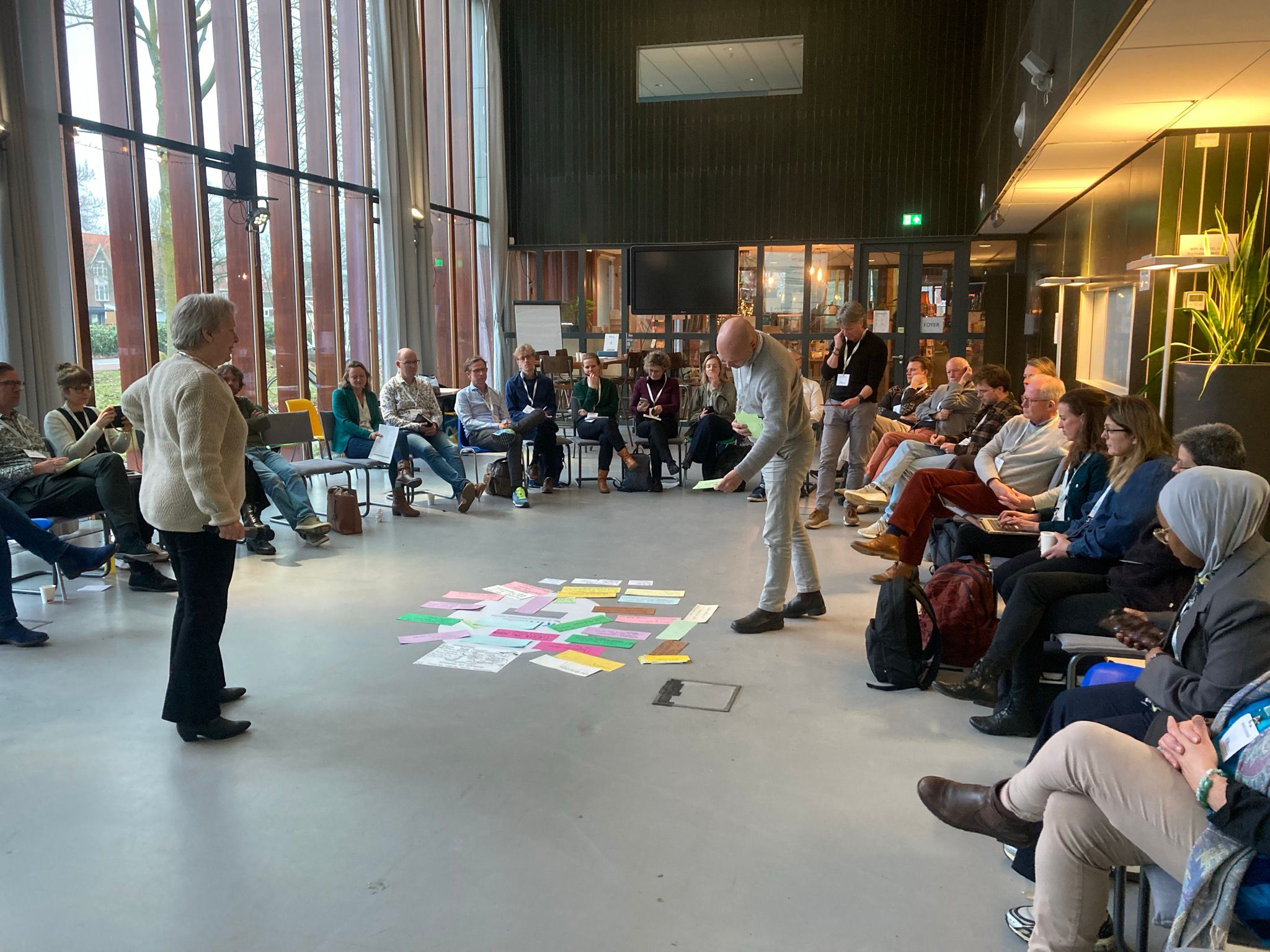
In October 2025, the “Transition to planetary health” programme was launched with the drafting of an initial transition analysis concept. This involved discussions with various experts in combination with literature research. On 10 February 2026, the Expert Meeting took place at Kanaal30 to validate and supplement the transition analysis with various experts. Input was also gathered on the focus of the Knowledge-in-Action agenda. The Crutzen workshop will take place in Utrecht on 14 April 2026. This workshop will form the basis for drawing up a Knowledge-in-Action agenda and the thematic framework for the associated call for proposals. The call is expected to open for proposals in the summer of 2026. A total budget of €650,000 is available for projects of up to €50,000 in which civil society organisations and researchers work together to put knowledge into action.