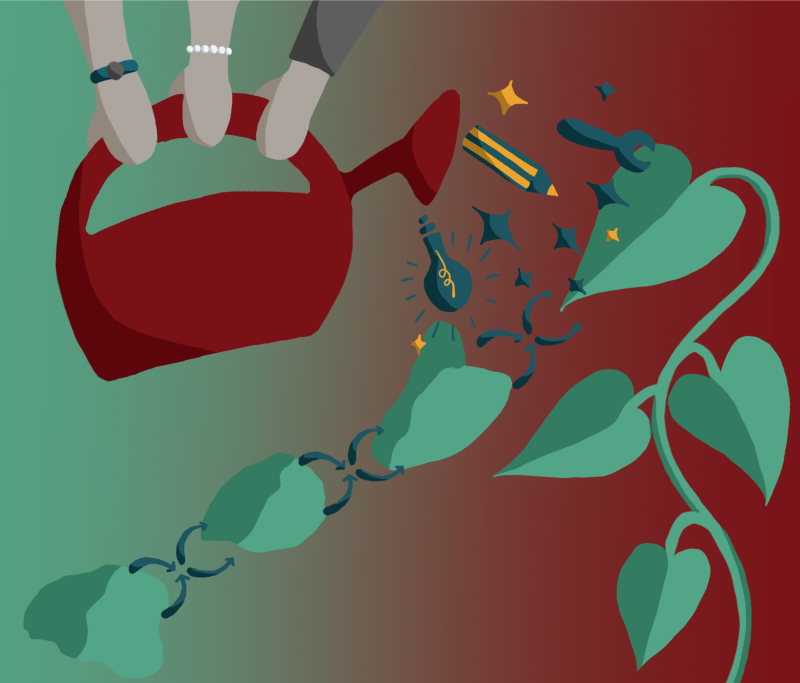
With the participation of UNL, KNAW, GrYA, the HBO SDG Coalition, OCW, SDSN, KIN and NWO, a consultative group consisting of sustainability coordinators, faculty members and researchers is working to accelerate this collaboration. This has resulted in two assignments: a transition analysis (assigned to Het Groene Brein and the Rathenau Institute) and an assignment to explore the potential establishment of a coordination structure (assigned to KNAW). Based on the findings of the transition analysis, the KNAW, with scientific support from Utrecht University, will work with stakeholders from the sector to explore whether a national coordination structure can add value to this effort and, if so, how it can be set up to truly support the sustainability of higher education, research and the broader science system.
Transition analysis
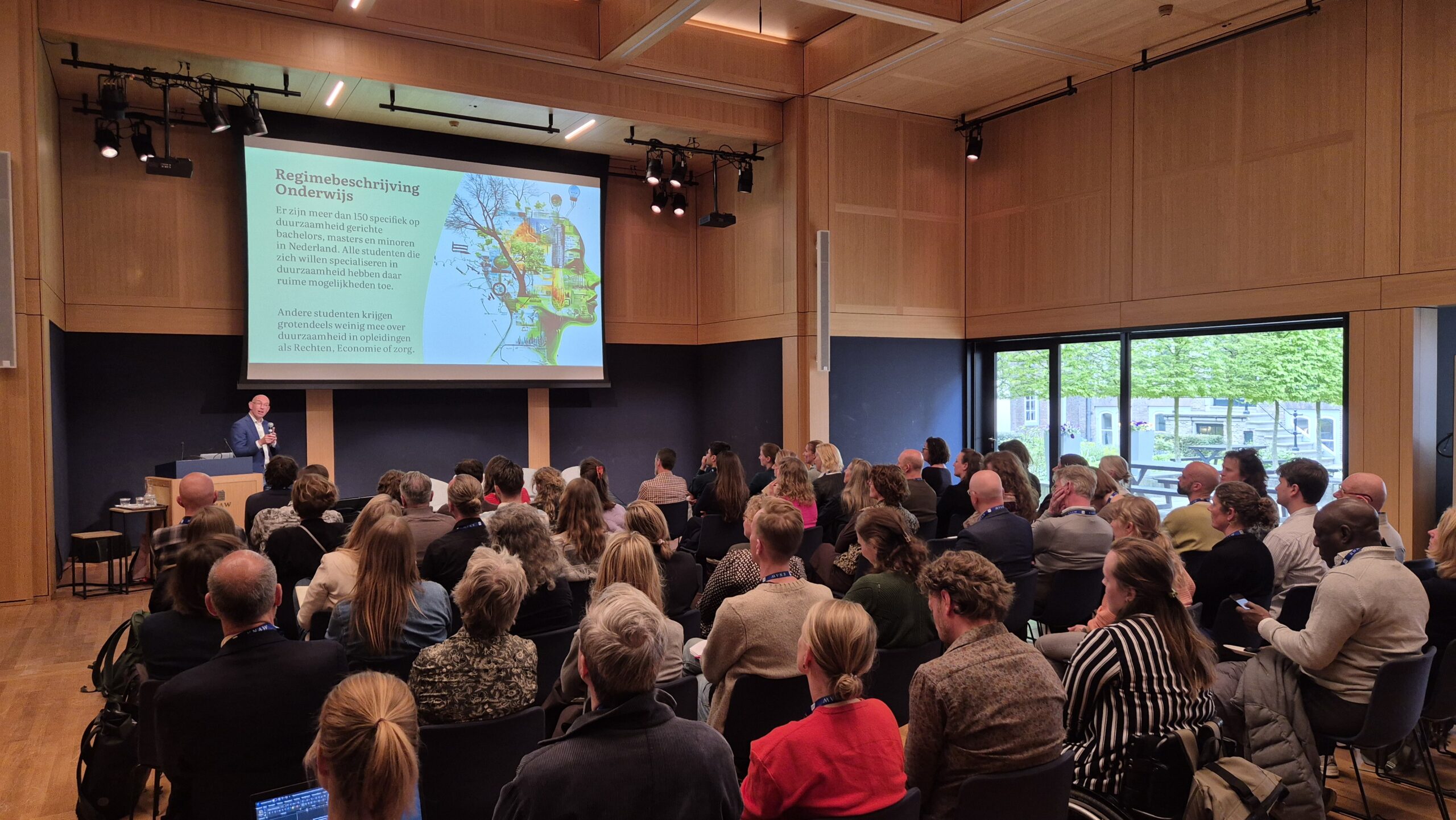
This study on the systemic sustainability of higher education, research and the science system provides a ‘snapshot’ of the sector’s current sustainability efforts. It also offers insight into the factors that accelerate and slow down sustainability—in the broadest sense. This primarily concerns the ‘policy levers’ that the sector could adjust to accelerate this transition. A transformative and transdisciplinary approach based on desired future scenarios is central to this effort. To this end, interviews were conducted and a brainstorming session was held with experts. On April 13, 2026, a major kick-off event was organized at the KNAW. Here, various stakeholders from academia, policy and practice engaged in dialogue regarding the most critical questions within this transition. As one of the four pillars, the importance of coordination was identified and elaborated, alongside teacher training, funding and the narrative.
This transition analysis will be completed in June 2026 and will guide the design of the coordination structure.
Coordination and the exploration of the importance of a structure
Although initiatives already exist, they are often fragmented, dependent on voluntary efforts, and lack formal national coordination. The goal is to better align existing networks and initiatives, set a common course, remove systemic barriers, and capitalize on opportunities that require collaboration.
Purpose of the structure
The intended coordination structure will be a overarching, unifying and guiding movement that brings together existing initiatives and stakeholders, stimulates new collaboration, and firmly anchors sustainability in policy and practice. Through a joint work program, the structure will support the sector in its transition to sustainability. The ultimate goal is a broadly supported, future-proof infrastructure that enables collective learning, acceleration and sustainable impact.
Approach and methodology
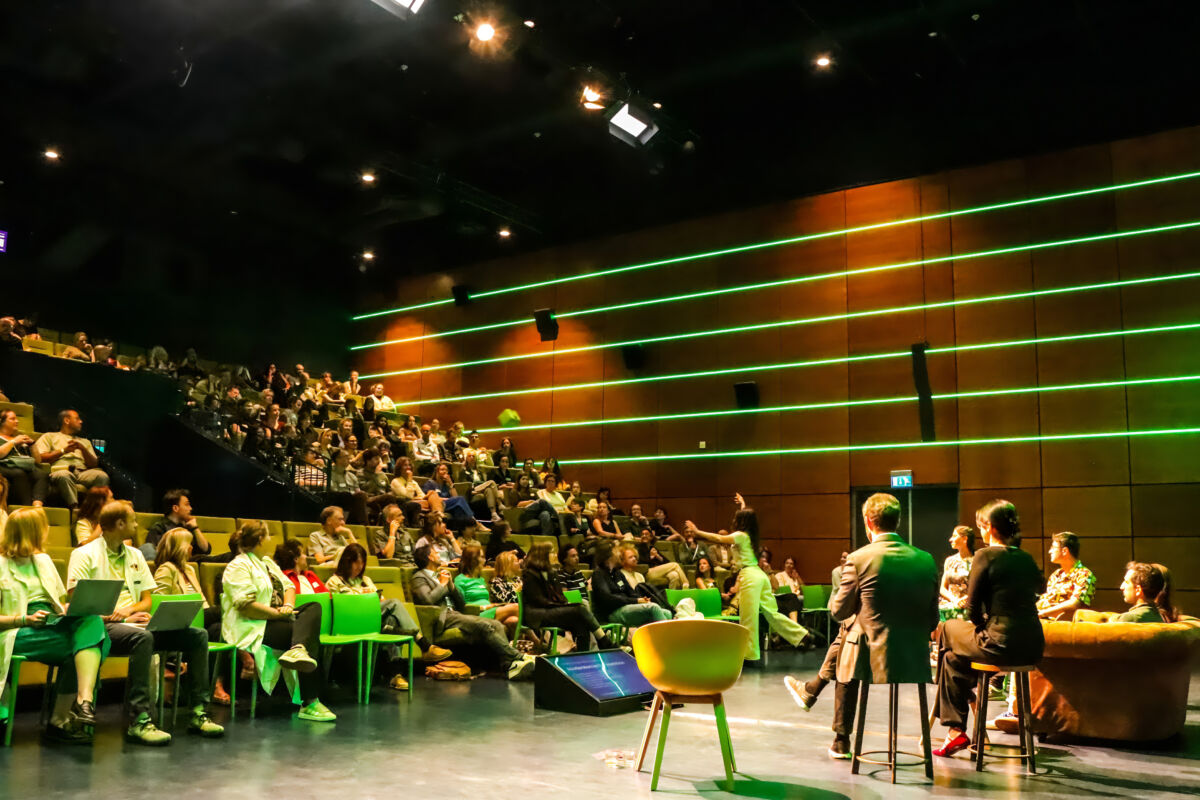
Administrative embedding and broad sector involvement are crucial in this regard. The assignment will therefore involve many moments of co-creation. The structure will be developed through a phased process of analysis, co-creation and pilots. Central to this is building support and fostering dialogue at various levels and with different stakeholders in order to jointly develop a work plan. Based on this, 1–2 pilot activities will be carried out and evaluated. The insights from these pilots will form the basis for further follow-up initiatives guided by the coordination structure.
Embedding within the Science in Transition program
Within the Science in Transition program line, KIN explores new forms of collaboration, funding, and working methods that support a just and sustainable climate transition. Making the science system itself more sustainable is a primary focus in this regard. The coordination structure may offer opportunities to scale up successful projects from this program line and embed them sustainably within the national science system.