werkgroep
The Car-Free City
The Car-Free City develops new strategies and a shared narrative to support municipalities and residents in working towards sustainable mobility and more liveable urban environments.




werkgroep
The Car-Free City develops new strategies and a shared narrative to support municipalities and residents in working towards sustainable mobility and more liveable urban environments.
Duration
april 2025
–
Heden
Location
The Netherlands (nationwide)
Parties involved
Natuur & Milieu, Gemeente Zwolle, Universiteit van Amsterdam
Theme
The Car-Free City network is creating a new narrative and a practical toolbox to help guide car-reduction measures in cities. Many municipalities encounter resistance when implementing sustainable mobility policies, for example around paid parking or reducing parking spaces. The network brings together policymakers, residents, designers and other experts to develop approaches that do not polarise, but instead create connection.
Through dialogue, research and design-led thinking, the network develops strategies that help municipalities shift the focus from car use to liveability and public health. The end products include an accessible public narrative, visual tools and a blueprint for participation — all designed to be used beyond the municipalities directly involved.
The Car-Free City aims to contribute structurally to a new perspective on mobility in urban areas. With support from KIN, the network is being strengthened and expanded, enabling cities to work more effectively with residents on sustainable mobility and high-quality public space.
As of December 2025, four municipalities have joined De Autoluwe Stad (The Car-Free City): Amersfoort, Haarlem, Nijmegen and Schiedam. All four are G40 municipalities, representing the provinces of Noord-Holland, Utrecht, Gelderland and Zuid-Holland. In addition, three experts have joined the initiative: Jens van der Weele (transition language), Professor Marco te Brömmelstroet and Dr Bianca Harms.
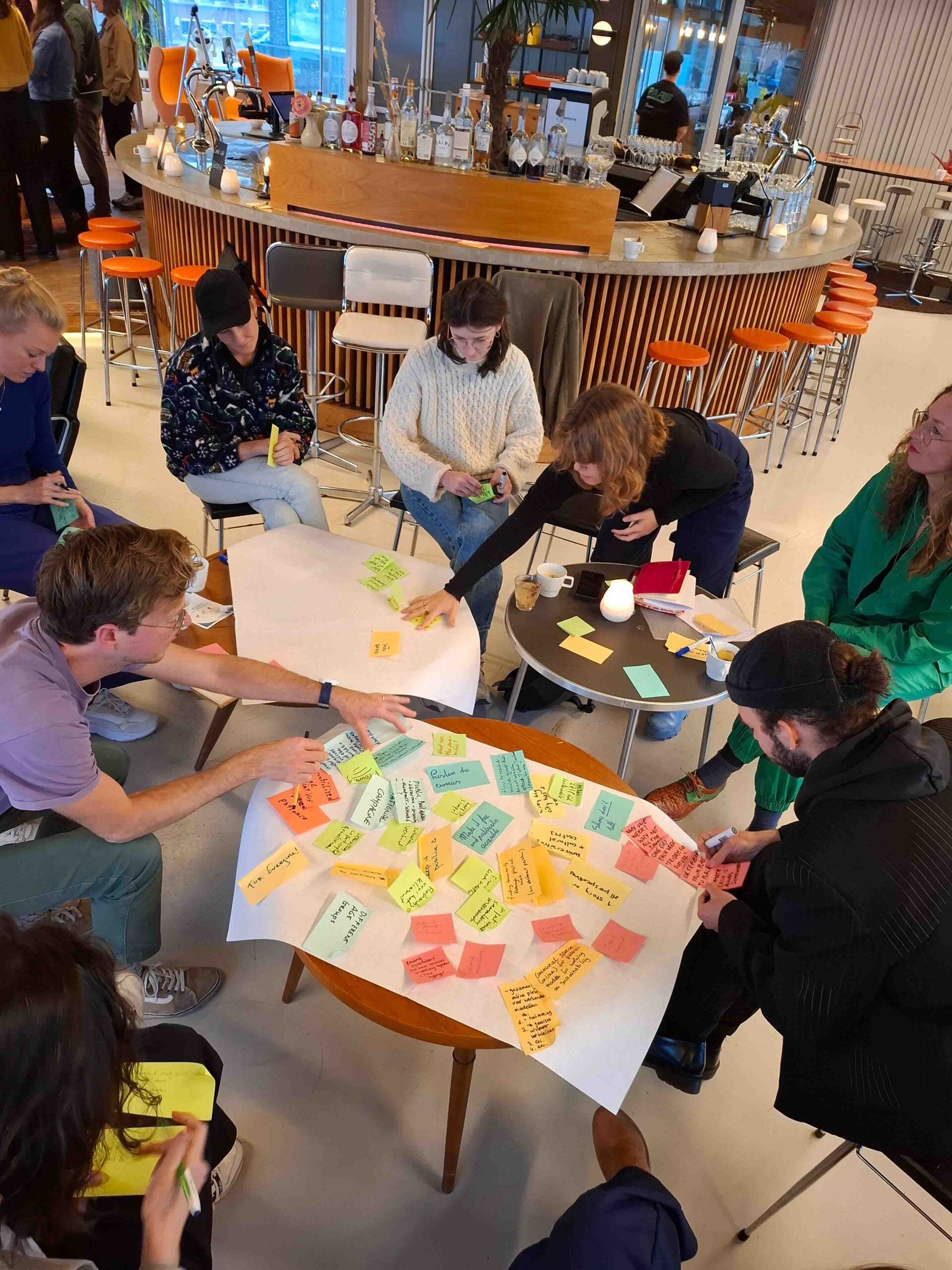
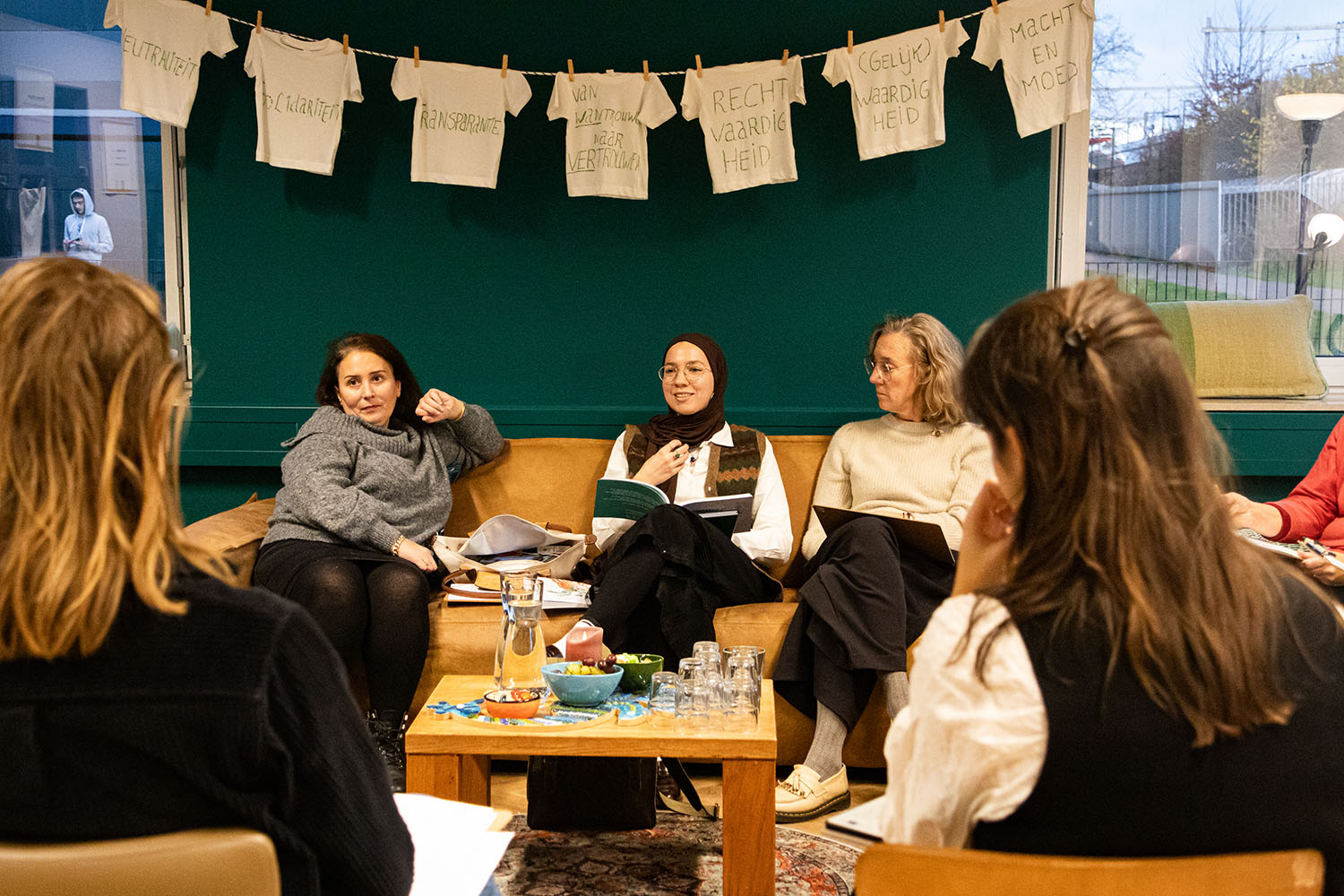
Together with Het Groene Brein, the first expert session has taken place, focusing on themes such as audience, values and narrative. The session also explored how value-based participation leads to a very different type of dialogue.
A second session will address the questions: how can multiple audience-specific stories be brought together into one shared narrative, and what is the impact of visual and imaginative communication?
The results of both sessions are included in a new handbook for municipalities: “From a Car-Free City to Livable Streets.”
The handbook was developed by Natuur & Milieu and Het Groene Brein as part of the De Autoluwe Stad network. It focuses on how municipalities can craft a more compelling narrative regarding the redesign of public spaces toward a low-traffic city, thereby fostering greater public support for a livable, healthy, and future-proof city.
In collaboration with experts Jens van der Weele, Jildau Stoelwinder, Marco Te Brömmelstroet, Bianca Harms and four G40 municipalities: Gemeente Amersfoort, Gemeente Haarlem, Gemeente Nijmegen and Gemeente Schiedam,the project explored new ways of communicating about the mobility transition. During two expert sessions, researchers and practitioners explored the themes of mobility, language, and behavioral change.
The handbook provides a theoretical foundation for developing new narratives. It is followed by a practical step-by-step plan featuring various tools, real-world examples, and municipal case studies from the four participating municipalities.
You can view the handbook by clicking the button below.
Please contact Björk Johannes, Programme Coordinator.